Life Story Template: A Fill-In Outline for Your Life Story Book
A free life story template on one page: ten chapters by life stage with fill-in sentence starters, plus pages for the front and back of your life story book.
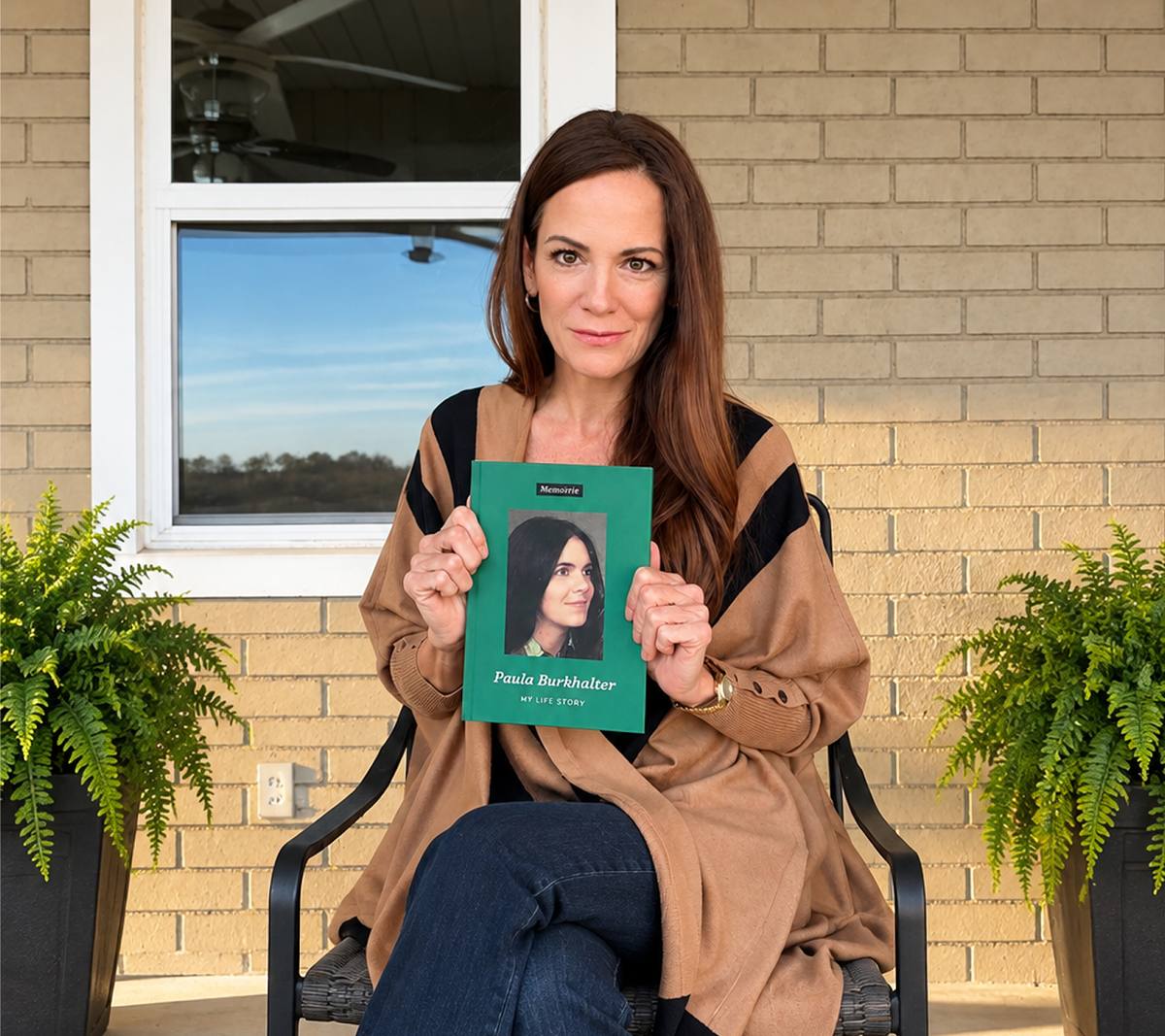
Make it a book: Write your life story as a hardcover book. Answer guided questions about each stage of your life by writing or speaking, and get your story back as a printed hardcover.
Illustrative image, AI-generated
This life story template is a fill-in outline for a book about your life, or the life of someone you love. It's written out in full on this page: ten chapters by life stage, each with a short note on what belongs there and sentence starters you complete in your own words, plus the pages that go at the front and back of a finished book.
Copy it into a notebook or a document and start anywhere. For advice on the writing itself, read our tips for writing your life story. If you'd rather plan chapters before writing anything, our autobiography outline and memoir chapter ideas cover structure and chapter titles. This page is the next step: blanks to fill.
How to use this template
- Copy the chapter headings into a notebook, a document or a set of folders. Give each chapter its own page so you can add to it later.
- Finish the sentence starters that spark something. Skip the rest. A starter is a door, not a test: once a sentence gets going, keep writing past it.
- Aim for one story per sitting. Fifteen minutes and one memory is a good session.
- Add photos as you go. Note who is in each one, where and roughly when, while you still remember.
- Cross out what doesn't fit and rename every chapter. Your life won't match a template exactly, and it shouldn't.
The front of the book
What to include: a title, who it's for and a short note to the reader. Write these last; they're easier once the stories exist.
- Title: ___ (a saying, a place or a nickname works well)
- This book is for ___, because ___.
- I'm writing this now because ___.
- If you read only one chapter, read ___.
The life story template, chapter by chapter
Chapter 1: Before I was born
What to include: your parents and grandparents, where the family came from and the stories you grew up hearing. Mark what you know for sure and what is family legend.
- My mother's family came from ___, and they were known for ___.
- My father's family came from ___. The story I heard most about them was ___.
- My parents met when ___.
- The family saying I still hear in my head is ___.
Chapter 2: The house I grew up in
What to include: your earliest memories, the home, the neighborhood and the people in it. Small sensory details do the most work here.
- The first home I remember was on ___. When I picture it, I see ___.
- On a weekday evening, our kitchen smelled like ___.
- The person who looked after me most was ___.
- I got into the most trouble for ___.
Chapter 3: School days
What to include: teachers, friends, how you got to school and what you wanted to be. One vivid day beats a list of grades.
- Every morning I got to school by ___.
- The teacher I remember best was ___, because ___.
- My best friend was ___. We spent our time ___.
- When adults asked what I wanted to be, I said ___.
Chapter 4: Growing up and leaving home
What to include: your teenage years, first jobs, what was happening in the world and the day you left home.
- At sixteen, I spent Saturday nights ___.
- My first paying job was ___, and I earned ___.
- The news event I remember from those years is ___.
- I left home in ___ to ___, carrying ___.
Chapter 5: Love
What to include: how you met the people who mattered, the wedding or the decision to commit, and what the partnership taught you. Leave out what isn't yours to tell.
- The first time I saw ___, they were ___.
- Our first date was ___.
- The day we got married, the thing nobody planned was ___.
- What has kept us together is ___.
Chapter 6: Work
What to include: how you earned a living, the people you worked with and what you were proud of. Explain your job as you would to a ten-year-old; future readers won't know the jargon.
- I ended up in my line of work because ___.
- A normal workday started at ___ and involved ___.
- The boss or colleague who taught me the most was ___.
- The work I'm proudest of is ___.
Chapter 7: Raising a family
What to include: children, or the people you cared for and mentored, the traditions you started and the stories the family still retells.
- When our first child arrived, I learned ___.
- A tradition we started was ___.
- The family trip everyone still talks about is ___.
- Something I did differently from my own parents was ___.
Chapter 8: The hard years
What to include: loss, illness, money trouble or a move that went wrong, and how you came through. Write only as much as you're comfortable sharing. A paragraph can be enough.
- The hardest year of my life was ___, because ___.
- The person who helped me through was ___.
- What got me out of bed in those months was ___.
- Looking back, that time taught me ___.
Chapter 9: Later life
What to include: retirement, grandchildren, new interests and what an ordinary good day looks like now.
- Since retiring, I've spent my time ___.
- Being a grandparent surprised me because ___.
- A good day for me now starts with ___.
- Something I took up late in life is ___.
Chapter 10: What I want you to know
What to include: what you believe, what you would tell your younger self and the people you want to thank by name. Many readers turn to this chapter first.
- If I could tell my twenty-year-old self one thing, it would be ___.
- I changed my mind about ___.
- I want to thank ___ for ___.
- When you think of me, I hope you remember ___.
The back of the book
What to include: reference pages that readers come back to for years. Each one is quick to make once the chapters are done.
- A timeline: births, moves, weddings and jobs, one line each, with years. Our guide to building a personal timeline shows how.
- A simple family tree: names, years and places for three or four generations.
- Photo captions: who, where, roughly when and one sentence about what was happening.
- Recipes, songs or sayings: the things that exist only in your memory.
Tips for filling in the template
- Write the way you talk. If you'd say "we were flat broke," write that, not "we had limited financial means."
- Use names and numbers. "Mrs. Kowalski's fourth-grade class" is a memory. "A teacher I liked" is a placeholder.
- Talk it out first. Read a starter aloud, answer it into your phone's voice recorder, then type up what you said.
- Borrow other people's memories. Ask a sibling or an old friend about the same event; our questions about childhood memories are a good place to begin.
- Leave gaps on purpose. An empty chapter is better than a stalled book. You can come back to it.
If you like the idea of a template but would rather answer than outline, an Autobiography from Memowrite works the same way: you answer guided questions about each stage of your life by writing or speaking, at your own pace. Every plan includes 50 guided questions, and your answers are printed as a hardcover book of up to 500 pages with up to 100 photos.
Frequently Asked Questions
What should a life story template include?
Chapters for each stage of life, from family roots to what you've learned, with prompts for the specific memories that belong in each. A good template also covers the front pages (title, dedication, a note to the reader) and the back pages (timeline, family tree, photo captions).
Do I have to fill in the chapters in order?
No. Start with the chapter that comes easiest, often childhood or the story of how you met your partner. The order only matters when you put the book together.
Can I use this template to write a parent's life story?
Yes. Turn each sentence starter into a question ("Where did your mother's family come from?") and ask it out loud, then write up the answers. Our guide on how to write someone else's life story covers interviews, permission and voice.
How long will my life story book be?
That depends on how much you write per chapter. If you answer around four starters per chapter at a few hundred words each, ten chapters come to roughly 12,000 to 20,000 words. See how long a memoir should be for typical ranges.
Written by Memowrite Team
The people who build and run Memowrite write and edit every article on this blog.
More about the Memowrite TeamStart your own book today
Answer guided questions about each stage of your life by writing or speaking, and get your story back as a printed hardcover.