How to Write Someone Else's Life Story (a Parent's or Grandparent's)
How to write someone else's life story, like a parent's or grandparent's: permission, interviews, photos and records, voice, privacy and printing the book.
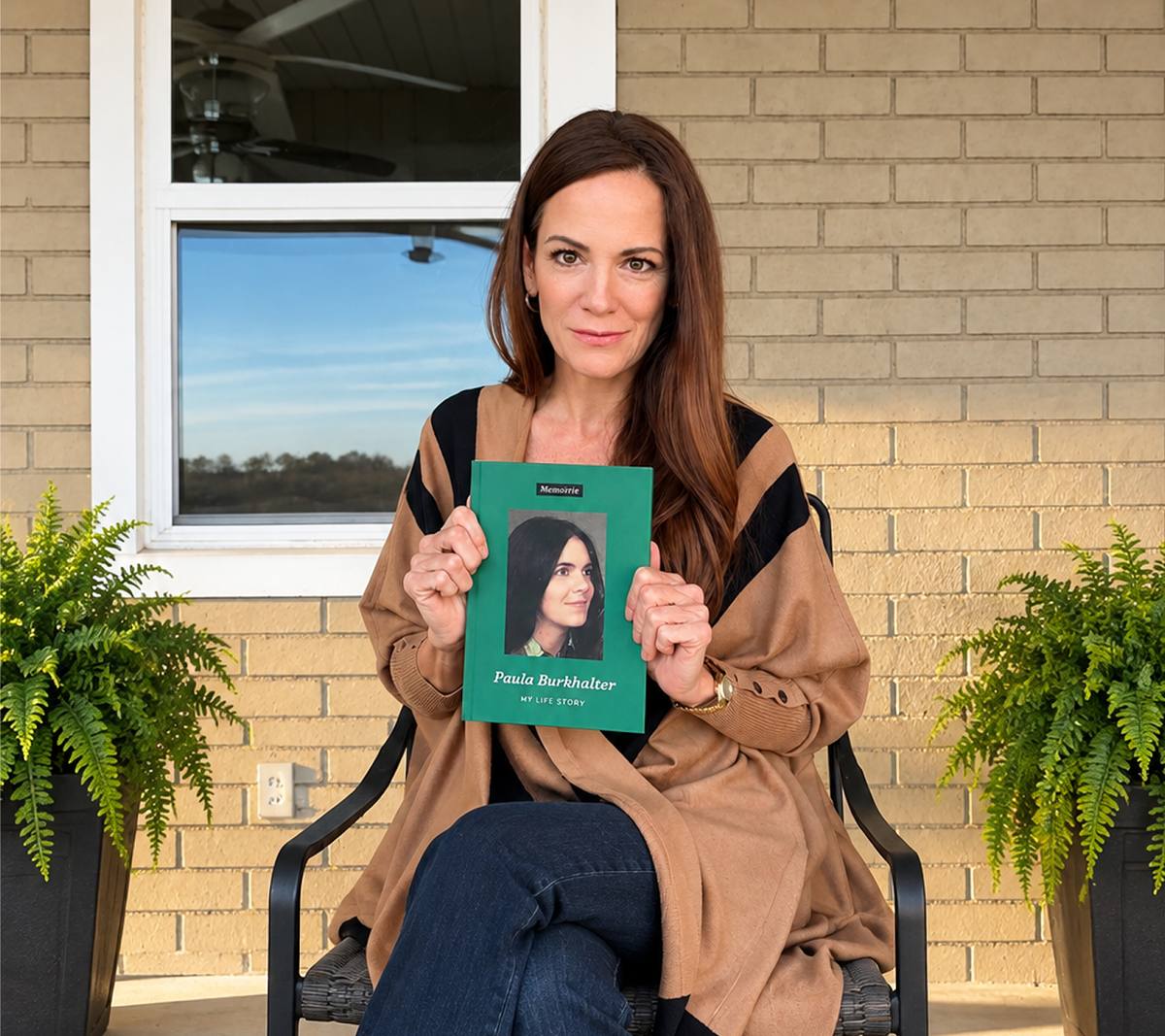
Make it a book: A life story book gift for elderly parents. Your parents answer guided questions about their life by speaking or writing, and their stories are printed as a hardcover book.
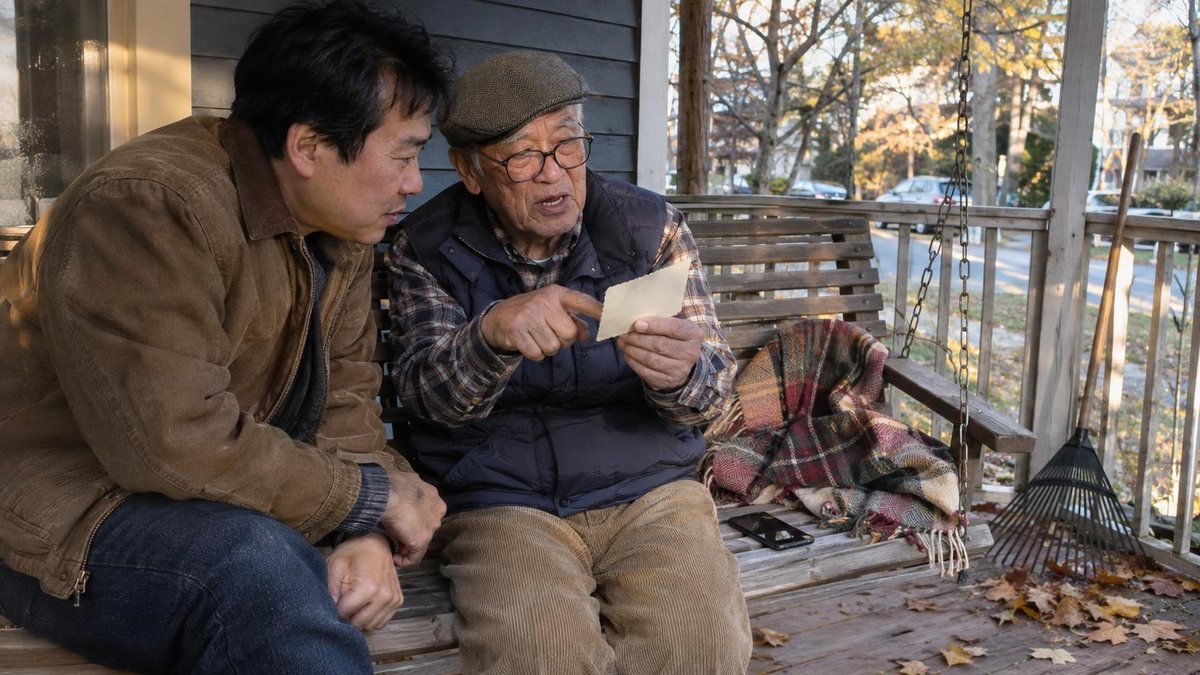
Illustrative image, AI-generated
Writing someone else's life story, usually a parent's or a grandparent's, is a different job from writing your own. You aren't the source. Your role is closer to producer: you ask, listen, gather, check and shape, while the person whose life it is stays in charge of what goes in.
This guide walks through that job from the first conversation to a printed book. Many of the craft basics are the same as in our tips for writing your life story, so here we focus on what changes when the life belongs to someone else: permission, interviews, voice, fact-checking and the chapters they may not want written.
1. Ask first, and make it their project too
Before you record a word, ask. It sounds obvious, but a surprise biography can feel like an inspection. Explain why you want to do it ("I want the kids to know how you got here") and what you'll make: a book for the family, not a book for strangers.
Oral historians treat this as a formal step. The Oral History Association's best practices call for the narrator's informed consent, a clear explanation of the topics and how the recording will be kept and shared, and respect for the narrator's right to refuse to discuss certain subjects. A family project doesn't need paperwork, but the same courtesy applies. Agree on a few things up front:
- Who the book is for. Children and grandchildren only, the wider family, or anyone who wants a copy.
- What is off limits. Some topics may be closed for good; others may be fine once a particular person has passed.
- Who reads drafts. The subject should see every chapter before anyone else does.
- Whose name goes on the cover. "By Margaret Hale", "by Margaret Hale, as told to her son" and "by her son" say three different things.
Then give them real work to do. A parent who chooses the photos, corrects the drafts and picks the title will care about the book. One who is only interviewed may grow tired of it.
2. Gather the material
A life story is built from four kinds of material. You need some of each, and you'll keep finding more until the day you print.
Interviews
Short, regular sessions work better than one long day. An hour on a Sunday afternoon, once a week, keeps the memories flowing without wearing anyone out. Use open questions ("Tell me about the farm") rather than yes-or-no ones ("Did you like the farm?"), and follow the detail that makes their eyes light up, even if it's off your list.
Record every session. The Oral History Association recommends a high-quality recording in a quiet place with little background noise, and backup copies kept in more than one location as soon as possible. A phone in a quiet room, away from the dishwasher and the TV, is enough for a family book.
You don't need to invent the questions. Our lists of questions to ask your parents and questions to ask elderly parents are organized by stage of life, and our family history questions go further back.
A simple plan for the first three sessions:
- Session one: the easy years. Start with childhood: the house, the street, brothers and sisters. Early memories are often vivid and low-stakes, and the first session is mostly about getting comfortable with the recorder.
- Session two: one big story. Ask for the story they tell most often, such as how they met your other parent or the year they moved across the country. Let them run with it.
- Session three: fill the gaps. Play back a few minutes of the earlier recordings and ask what they'd add. Hearing their own voice often brings back more.
Keep sessions short for an older parent, sit where they can see your face, and stop before they're tired rather than after. You can always come back next week.
Photos and objects
Sit side by side with a shoebox of photographs and ask, "Who's this? Where were you going?" Pictures pull out stories that direct questions miss. The same goes for objects: a watch, a recipe card in their mother's handwriting, a medal in a drawer. Write the names on the back of each photo as you go, in pencil.
Documents
Letters, report cards, discharge papers, marriage certificates and old passports pin down dates and places that memory blurs. Public records help too. The US National Archives holds census, military service, immigration and naturalization records for family researchers. Because of a 72-year restriction on access, the 1950 census, released on April 1, 2022, is the most recent one you can search. If your father was a child in 1950, you may find his household listed there, with the names of the people living with him.
Other relatives
Brothers, sisters, cousins and old friends remember the same events differently, and sometimes they remember what the subject has forgotten. An aunt might recall the night your grandfather drove through a snowstorm to get to the hospital; he might mention only that "the roads were bad." Collect these versions, then show them to your subject and ask which one belongs in the book.
3. Choose the voice: theirs, yours or both
This is the biggest decision you'll make, and it's worth making early because it changes how you interview and how you edit.
| Approach | How it reads | Works best when |
|---|---|---|
| First person, in their words | "I was born in the back bedroom of my grandmother's house." | They are a natural talker and you have good recordings |
| Third person, in your words | "Dad was born in the back bedroom of his grandmother's house." | You are filling gaps from documents and other relatives |
| Mixed | Your short introduction to each chapter, then their stories in their own voice | You want context for younger readers but their voice at the center |
First person is the most common choice for a family book, because their voice is what the grandchildren will want. If you go that way, edit transcripts lightly. Remove false starts and repeated words, put stories in a sensible order, but keep their phrases. If your grandmother says "we didn't have two nickels to rub together," that line stays. Write it the way she'd say it, not the way a textbook would.
Here is an illustrative example of what light editing looks like. A raw transcript might read:
So we, um, we moved to Toledo in, it must have been '58, no, '59, because your uncle Ray was just born, and the apartment, oh, the apartment was over a bakery, so the whole place smelled like bread at four in the morning, every morning.
Lightly edited, it becomes:
We moved to Toledo in 1959, the year your uncle Ray was born. Our apartment was over a bakery, so the whole place smelled like bread at four in the morning, every morning.
The date has been checked, the false starts are gone, and every word that matters is still hers.
4. Give it a structure
Most family life stories run in order, from family roots to later life, because that is easy to follow. Some read better by theme: one chapter on work, one on faith, one on the houses they lived in. Spread your transcripts out, group the stories, then name the groups.
If you want a ready-made frame, our life story template gives ten chapters by life stage with sentence starters you can turn into interview questions. The autobiography outline offers a chronological and a themed version.
5. Write, then check everything with them
Draft one chapter at a time and take it back to your subject before moving on. Reading aloud works better than handing over pages, especially for someone with tired eyes. Stop when they wince or laugh; both mean something needs a closer look.
When you check a chapter, go through it for:
- Names and spellings. People, streets, towns, ships, companies. Ask them to spell anything unusual.
- Dates. Match them against documents where you can. Where you can't, "about 1962" is honest.
- Family legends. Keep them, but label them: "The family story is that…" lets a tale stay in the book without claiming it as fact.
- Tone. Ask, "Does this sound like you?" If they say "I'd never say that," change it.
6. Handle hard chapters and privacy with care
Every long life has a chapter that hurts: a death, a divorce, a war, a stretch of drinking or debt. Your subject decides how much of it goes in. Some people want the whole truth on paper; others want one sentence and a change of subject. Both are fine.
A few habits help:
- Ask, don't push. "Would you like that time to be in the book?" gives them an easy way to say no.
- Separate their story from other people's secrets. A sibling's illness or a cousin's adoption may not be your subject's to share. Ask the person concerned, or leave it out.
- Write around it. "Those were hard years, and we got through them together" can be enough.
- Keep a private file. Some stories belong in a recording kept by one family member, not in a printed book.
- Get advice before going public. If the book will be sold or shared beyond the family and it describes living people, talk to a lawyer first.
7. Finish it and print it
The most common way these books fail is that they never end. Pick a date that matters, such as an 80th birthday, an anniversary or a family reunion, and work back from it. Leave room for a last read-through with your subject.
Before you print, add the pages readers will use most: a simple family tree, a timeline of moves and milestones, and captions on every photo saying who, where and roughly when. Print enough copies for each branch of the family, and keep the recordings and the final file in two places.
Letting them tell it themselves
Sometimes the best way to write someone else's life story is to set things up so they can tell it, with you nearby to help. That's how a Memowrite book works as a gift: your parent answers guided questions about their life by writing or speaking, at their own pace, and their answers are printed as a hardcover book with up to 100 photos. It suits a parent who would rather talk than type; see our gift for elderly parents, or the version made for mom.
Frequently Asked Questions
Can you write a memoir about someone else?
Strictly speaking, a memoir is about the writer's own life, so a book about your mother is a biography. You can write a memoir about your relationship with her, told from your side. Or you can help her write her own memoir in first person, "as told to" you, which is what most family life story books are.
Should I write in first or third person?
First person in their words is usually the richer choice for family readers, because it keeps their voice. Third person works better when much of the material comes from documents and other relatives rather than from the subject.
What if my parent doesn't want to talk about part of their life?
Respect it and move on. The Oral History Association's best practices list the right to refuse certain subjects among the narrator's rights. You can mention a period briefly without detail, or leave a gap. Sometimes a person comes back to a topic later, once they trust how the book is being handled.
How long does it take to write someone's life story?
It depends on how much time you both have. Weekly one-hour interviews over a few months, followed by writing and review, is a realistic pace for a family book. Set a target date and plan backward from it.
What if the person has already died?
You can still write their story from letters, photos, documents and the memories of people who knew them. Be open about what is known and what is pieced together. A tribute book collects memories from several family members into one volume.
Written by Memowrite Team
The people who build and run Memowrite write and edit every article on this blog.
More about the Memowrite TeamStart your own book today
Your parents answer guided questions about their life by speaking or writing, and their stories are printed as a hardcover book.