Making it easy at ninety: eyes, hands and energy
Plan the gift around how they are now, not how they were at seventy.
- Eyesight. Read each question aloud rather than handing over a screen. If they like to see it too, write the question on a card in large letters.
- Hands. Let them answer by speaking. Nobody needs to type, tap or scroll except the family member helping.
- Hearing. Sit close, face them, turn off the television and check that hearing aids are in.
- Energy. One question per visit is plenty. Twenty minutes, then stop while they are still enjoying it.
- Good and bad days. There is no schedule and no set number of questions they must answer. On a tired day, skip it.
90th birthday gift ideas the whole family can share
The family does the setting up and the asking. Choose “As a gift” at checkout. Right after payment you get an email on how to set up the gift, and the account can be created in the birthday person's name. One person manages it; everyone else takes part.
- Make a simple rota: each child or grandchild takes a few questions to ask on their visits.
- Relatives who live far away can ask a question by phone while someone in the room helps get the answer down.
- Great-grandchildren can ask the simplest questions, such as their first pet or favorite song, and may get the warmest answers of all.
- Keep a list of who has asked what, so nobody repeats a question by accident.
Our list of questions to ask an 80 or 90 year old includes simple questions for someone who tires easily.
Giving it on the day
A 90th birthday is often a shorter party, with family taking turns to sit and talk. Give a card that explains the gift in plain words: “We want to hear your stories, in your own time, and keep them in a book.” Then ask the first question while the family is gathered, perhaps with a photo from their childhood to look at. The book is printed and shipped once the stories are ready, so nobody needs to hurry.
Who it suits, and when to choose something else
It suits a 90-year-old whose memory for the past is still good and who enjoys company and conversation. Questions about childhood and the people they grew up with are a gentle place to start.
It may not suit someone who is very frail, who finds talking about the past sad, or whose memory is no longer reliable. If a parent cannot tell their own story, the family can tell it for them: a book about someone you love is written by you, about them. If grief comes up during a question, let them decide whether to go on.
What the family keeps
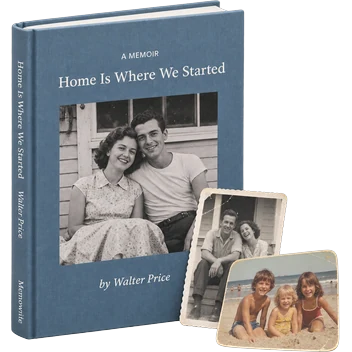
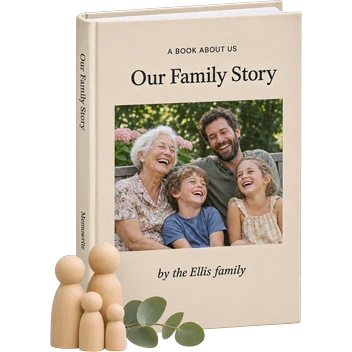
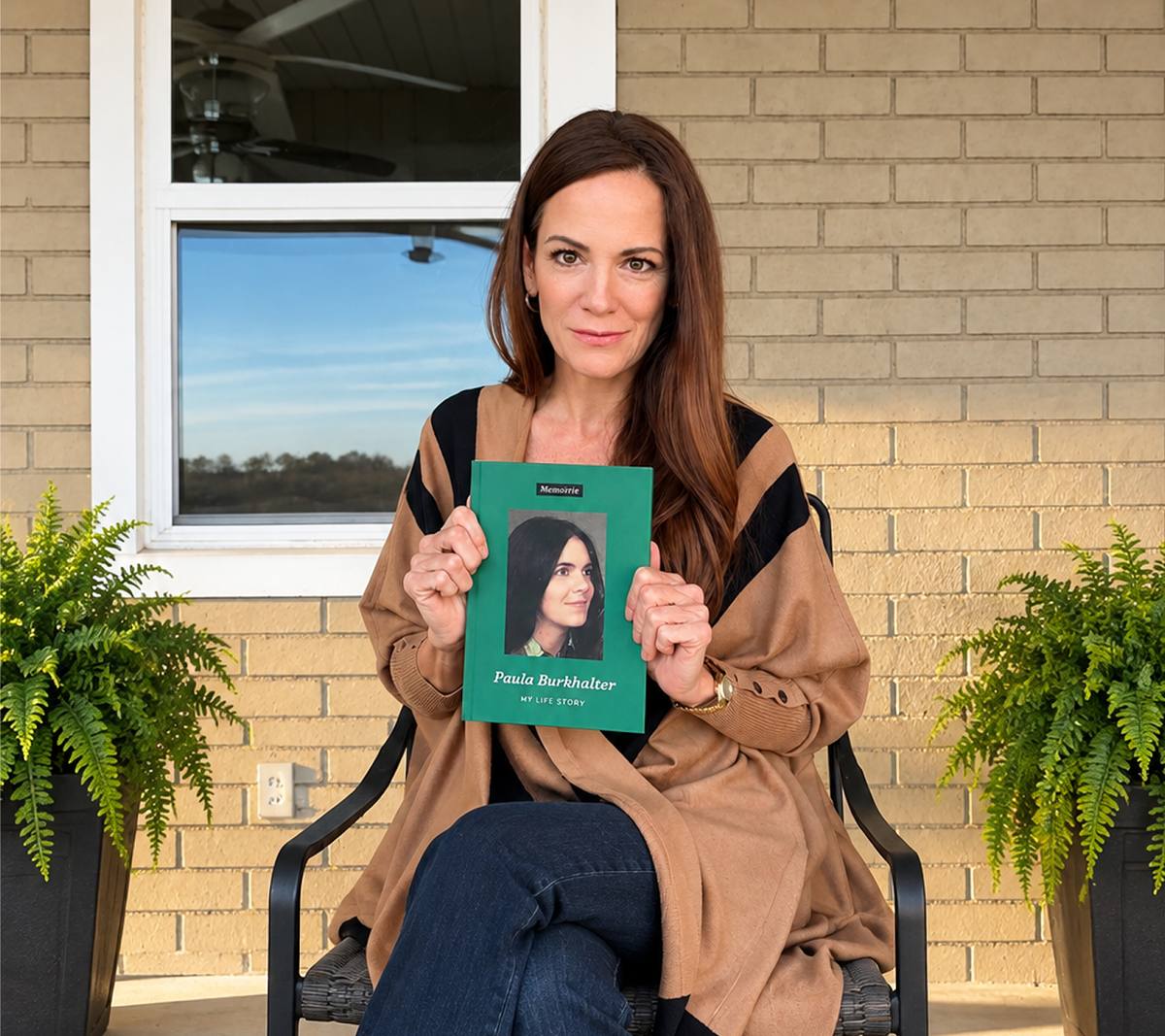
One printed hardcover book is included, with up to 500 pages and up to 100 photos in full color. The Photo Memoir plan restores up to 20 old photos and Family Memoirs restores up to 50, which helps with pictures that are nearly a century old. Extra copies can be added while the book is still being written, so each branch of the family can have one. They keep full ownership of their stories and photos.