
Autobiography guide
How to Write an Autobiography About Yourself, Step by Step
Updated
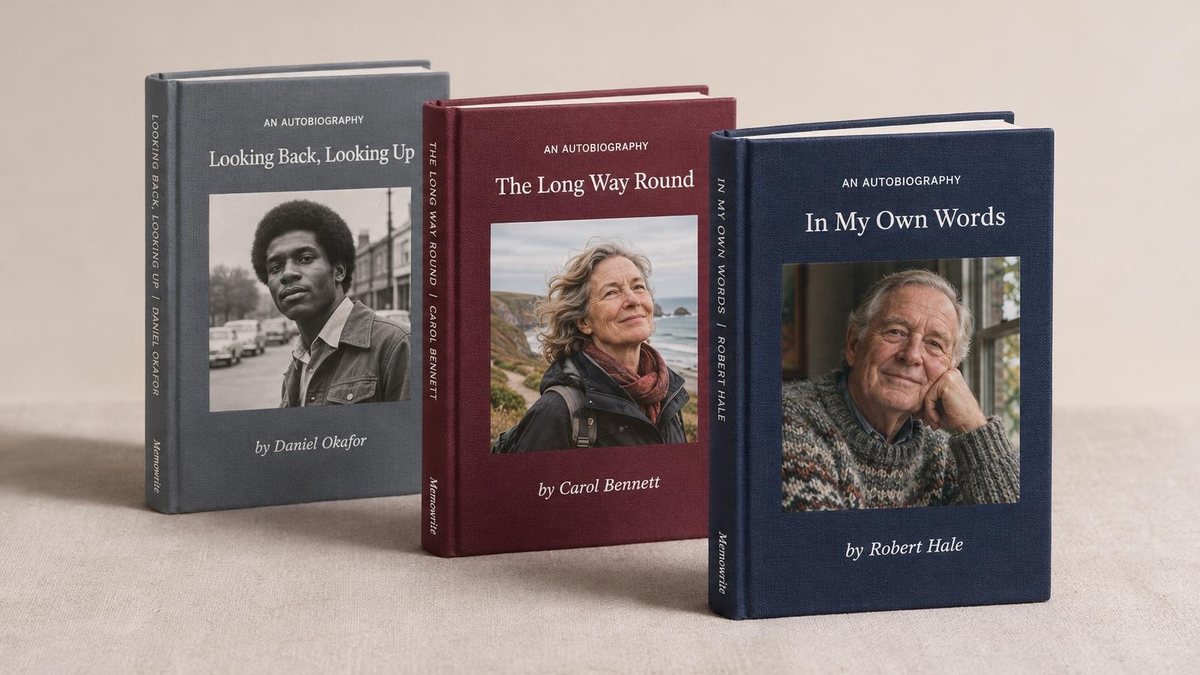
Plenty of people want to write their life story and never start, because the whole of a life is too big to hold at once. This guide shows how to write an autobiography about yourself in manageable steps, for adults writing for their family rather than for a publisher. If you would rather answer guided questions than plan it all yourself, an Autobiography from Memowrite does exactly that and prints the result as a hardcover book.
Step 1: Decide Who You Are Writing For
An autobiography for your grandchildren reads differently from one for old colleagues. Picture one reader, perhaps a grandchild at twenty-five, and write for them. That choice settles a lot: how much to explain about the times you lived through, what to leave out, and how formal to be. Most people writing for family find a warm, plain voice works best.
Step 2: Make a Timeline of Your Life
Before you write a paragraph, make a rough timeline. Divide a few sheets of paper by decade and note what happened in each: where you lived, school, jobs, relationships, children, moves, losses, world events that touched you. Don't worry about exact dates. The timeline is a map, not the book.
- List every address you have lived at. Homes are a strong memory trigger.
- List jobs, schools and the people you spent most of your time with in each.
- Mark three to five turning points: moments after which life went one way and not another.
- Add a column for the wider world: what was in the news, what things cost, what changed.
Step 3: Choose a Shape
Most autobiographies follow time, from birth or family roots to the present. It is the easiest shape for readers and for you. Some people prefer themes instead, with chapters such as Work, Love, Home and Faith, each moving through the years. A third option mixes the two: chronological chapters with a few themed ones placed where they fit.
Our autobiography outline gives a chapter-by-chapter template for each shape. If you only want to tell part of your life, or a single theme, that is closer to a memoir; our post on memoir vs autobiography explains the difference, and the memoir book is built for it.
Step 4: Gather Material
Spend a week collecting before you write. Pull out photo albums, letters, diaries, certificates, old calendars and report cards. Call a sibling or an old friend and ask what they remember about a particular year. Write down any detail that comes back: a phone number, a teacher's name, the color of a car. Our autobiography questions are organized by stage of life and help bring back what the timeline misses.
Step 5: Start Anywhere
You don't have to start with your birth. Start with the story you most want to tell, or the one you have told most often at dinner. Writing a chapter you enjoy builds momentum. You can arrange everything in order later; the opening of the book is often written last.
Step 6: Write Scenes, Not Lists
The difference between a life story people read and one they skim is scenes. “I worked at the factory for twelve years” is a fact. A scene puts the reader there: the whistle at six, the foreman who called everyone by their surname, the day the line stopped and nobody knew why. For each important period, pick one or two moments and tell them in detail.
- Use the senses: what you saw, heard, smelled and tasted.
- Include what people said, as closely as you remember it.
- Say what you felt then, and what you think about it now.
- Keep the summaries short and use them to link one scene to the next.
Step 7: Be Honest, and Fair to Others
Readers can tell when a life story has been polished smooth. Include mistakes, regrets and hard years, told from where you stand now. At the same time, your story includes other people's lives. Leave out details that would hurt someone who is still living, or change names where it matters. You decide what goes in and what stays out; an autobiography doesn't need to be a confession to be true.
Step 8: Find Your Voice
Write in the first person, the way you talk. If you would say “we didn't have two nickels to rub together,” write that. Your family will hear you in it. Don't reach for fancy words; plain ones age better. If writing feels stiff, try speaking a story aloud and transcribing it, then tidying it up.
Step 9: Add Photos
Photos help readers picture the people and places in your story. Choose ones that match the chapters, and write a short caption for each: who, where, roughly when, and what was happening. A photo of your first car with the story of how you bought it is worth more than ten unlabeled ones.
Step 10: Finish It
Life stories stall in the middle. Set a modest pace, such as one story a week, and keep it. Don't edit as you go; get to the end first. Then read the whole thing once, fix names and dates, cut what drags, and stop. A finished, imperfect book is worth far more to your family than a perfect one in a drawer.
If You Would Rather Not Plan It All Yourself
Some people enjoy outlining and drafting. Others would rather be asked. A Memowrite Autobiography gives you guided questions about your own life, so you never face a blank page. You answer by writing or by speaking, at your own pace, with no schedule. Every plan includes 50 guided questions and you can add your own. Your answers are printed as a hardcover book of up to 500 pages with up to 100 photos, and you keep full ownership of your stories.
Frequently Asked Questions
How do I start an autobiography about myself?
Make a rough timeline of your life, then write the story you most want to tell, wherever it falls. Many people open the finished book with an early memory or a defining moment, but you don't have to write it first.
How long should an autobiography be?
As long as your story needs. Autobiographies written for family range from a few dozen pages to several hundred. Aim for depth in the moments that matter rather than covering every year evenly.
Should an autobiography be written in the first person?
Yes. An autobiography is your own account of your life, so “I” is natural. Writing in your own voice is what makes it sound like you.
What should I leave out of my autobiography?
Anything that would hurt living people without adding to your story, private matters that belong to someone else, and long lists of dates. Keep what shows who you are and how you became that person.
Can someone help me write my autobiography?
Yes. A family member can interview you and type up your answers, or you can answer guided questions by speaking. The words and the memories stay yours.
Write your autobiography one question at a time
An Autobiography from Memowrite gives you guided questions about your own life. Answer by writing or speaking, add photos, and your answers are printed as a hardcover book. Plans start at $99.