How to write your testimony
Most testimonies, in any tradition, follow a simple shape. You do not need a template. Three parts are enough:
- Before. What your life and your beliefs were like earlier on. Be honest about what was missing, or what you were looking for.
- The turning point. What happened, who was there, and what changed in you. It may be one moment, or a slow season that lasted years.
- After. How you live and see things now, and what you still wrestle with. A testimony does not have to end with everything solved.
Keep it specific. A kitchen table, a hospital corridor, a conversation on a long drive: concrete details carry a story further than general statements. Write the way you talk. If writing is slow for you, answer by speaking instead.
What goes in a Faith & Testimony book
Think of the book as your life seen through faith, not a single moment. Themes that often belong in it:
- Faith in the home you grew up in, and the people who first showed it to you
- The questions and doubts you carried as you grew older
- Turning points: a loss, a recovery, a move, a marriage, a child
- The community around you: a congregation, a small group, a few close friends
- Prayer, practice and the habits that kept you steady in hard years
- What you would want your grandchildren to know about believing
You decide how much weight each one gets. You might write mostly about one turning point, or go decade by decade.
How the book gets written
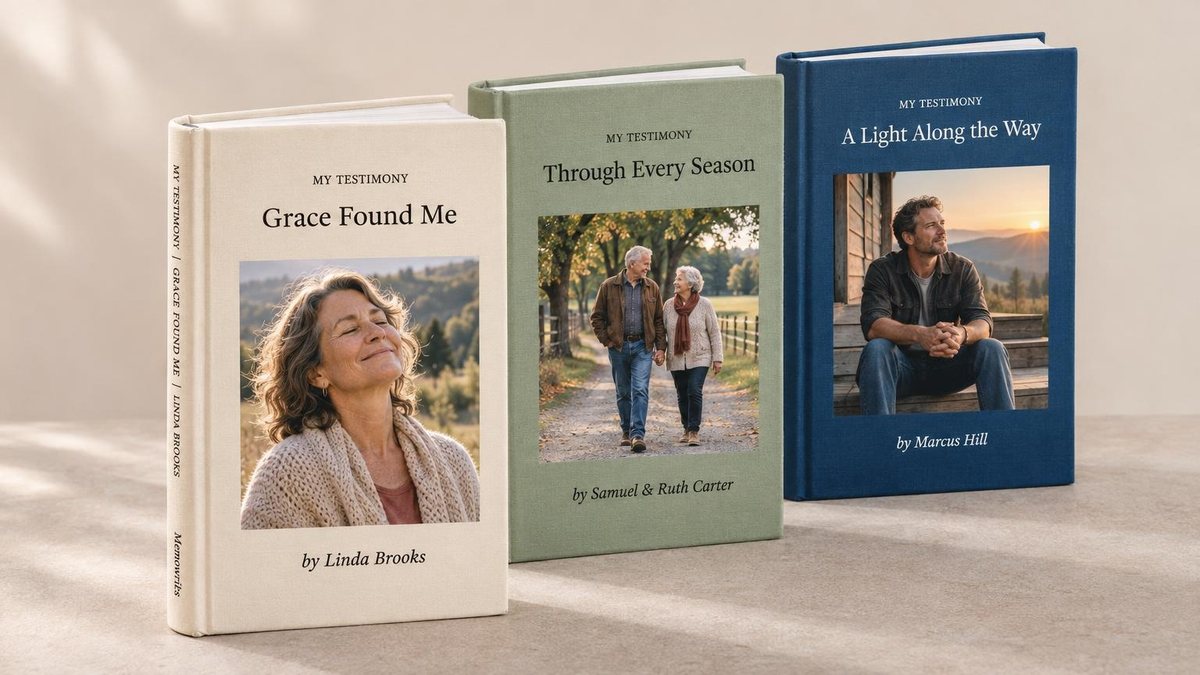
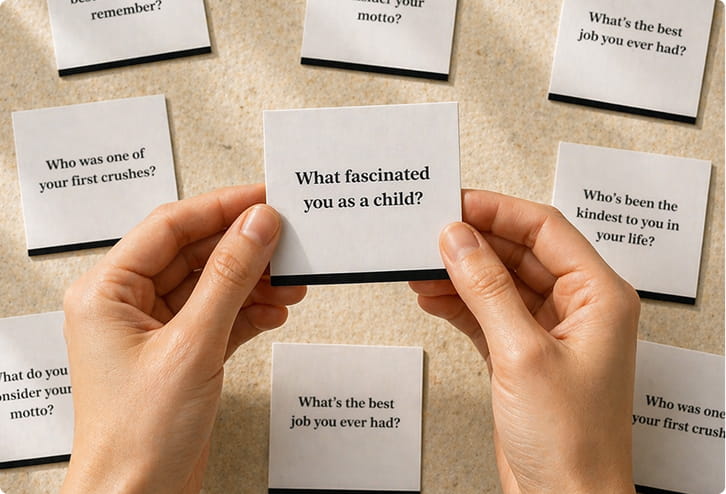
Every plan includes 50 guided questions. You answer them by writing or by speaking, whenever it suits you, with no schedule. You can skip questions, add your own, and answer as many or as few as you like. Add up to 100 photos in full color: a baptism or a wedding, the building where you worshiped, the people who mattered.
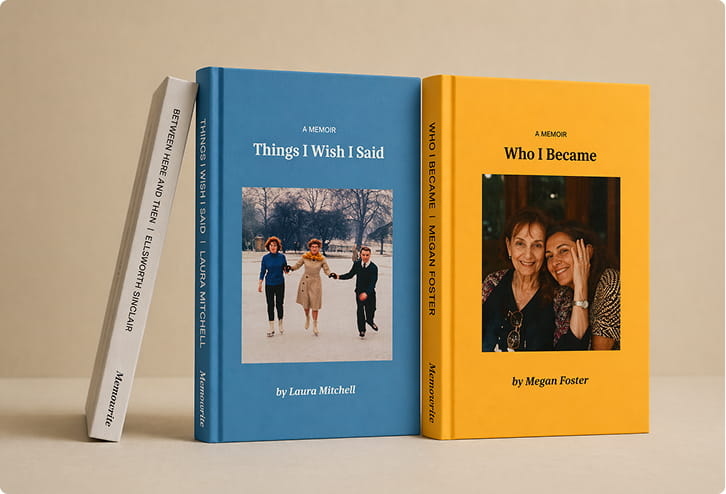
When your stories are ready, they are printed as a hardcover book of up to 500 pages. You keep full ownership of your stories and photos. How it works walks through each step.
Sharing your testimony with your family
A book is a gentle way to share faith. Nobody is put on the spot, and each reader takes it in at their own pace. A grown child who has drifted from faith can read about your doubts as well as your convictions. A grandchild can meet the person you were at their age.
- Extra copies can be added while the book is still being written, so each of your children can have one.
- Read a chapter aloud at a family gathering, or give the book quietly and let it speak for itself.
- Share a few pages with your small group or church, if you want to.
- Leave room for questions. The book can start conversations, not only end them.
Should I write my testimony? Who this book suits, and who it may not
It suits someone who has shared their testimony out loud and wants it written down, someone in a season of reflection, or a parent or grandparent who wants to pass their faith story on. It also suits a person in a recovery or support group who is putting their story together for the first time.
It may not suit someone who keeps their faith private and would feel exposed in print. It is also not a devotional or a study guide: it is your own story, not teaching. If you are in the middle of a hard season of doubt, you may prefer to wait until you have some distance, and start when it feels right.