How to Record Your Parents' or Grandparents' Stories (5 Ways Compared)
How to record family stories: phone audio, video, written answers, a story journal or a printed book from guided questions, compared on cost, effort and result.
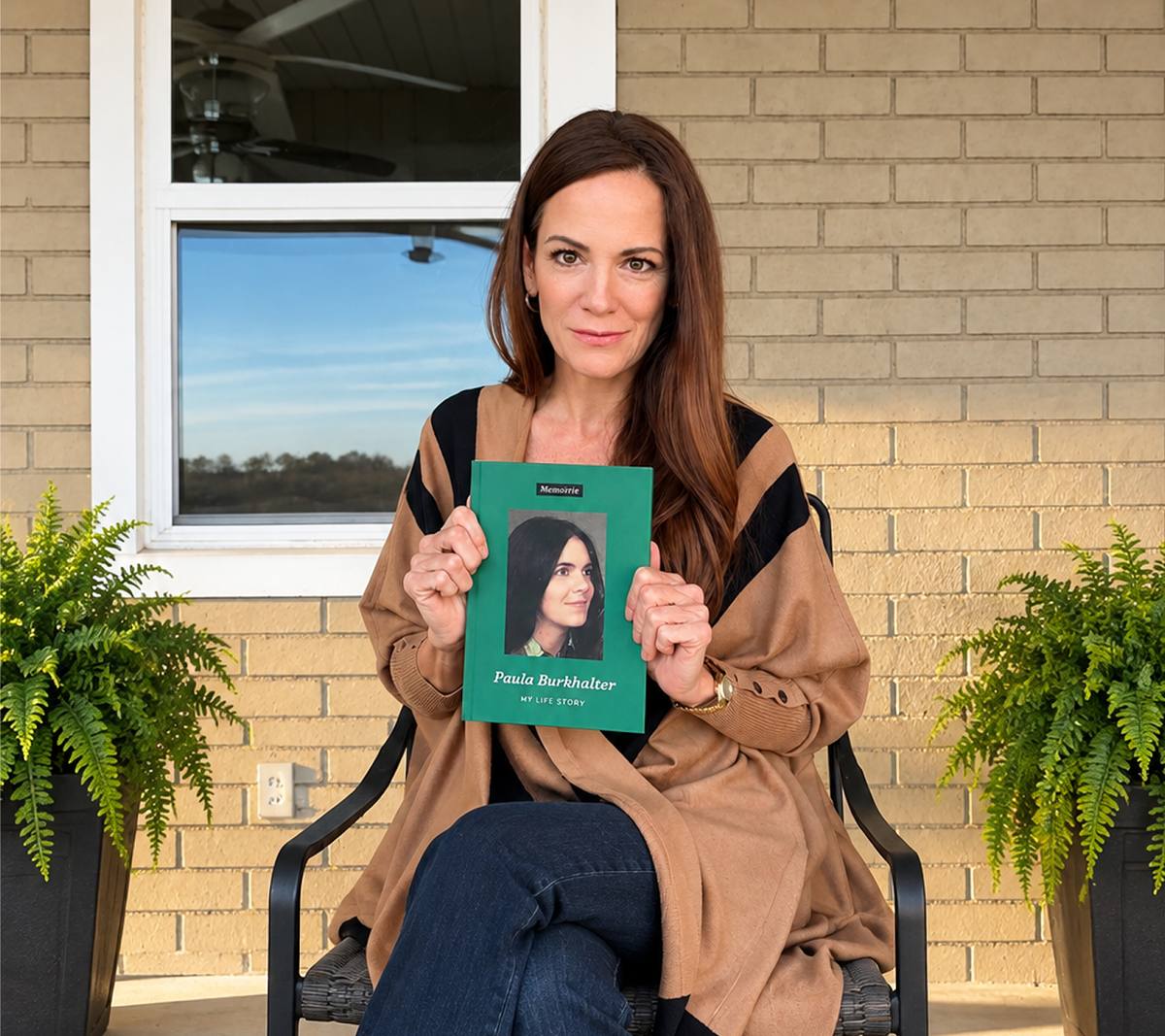
Make it a book: Give your grandparents a book of their stories. They answer guided questions by writing or speaking, and their stories are printed as a hardcover book.
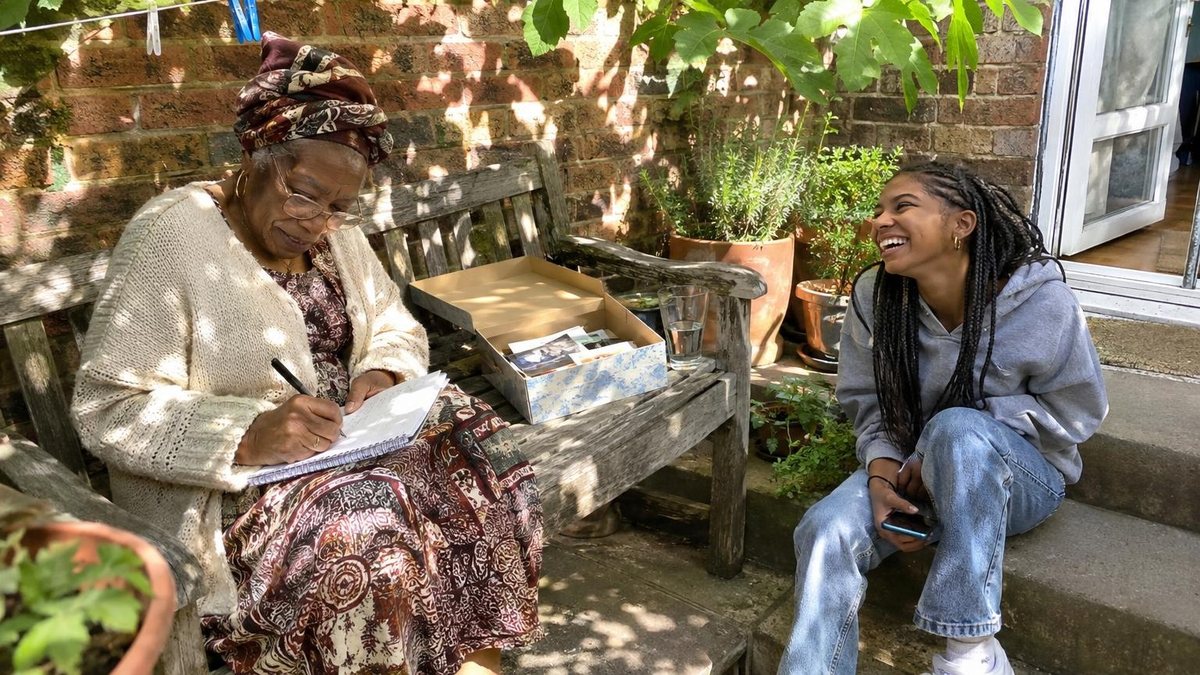
Illustrative image, AI-generated
You have decided to get your parents' or grandparents' stories down before they are lost. The next question is how. A phone recording, a video, a notebook, a stack of letters, a printed book: each one captures something different, asks a different amount of work from you and from them, and leaves you with something different on the shelf.
This guide compares five ways to record family stories, side by side, so you can pick the one that suits your family. It is part of our larger guide to preserving family memories. Once you have chosen a method, our step-by-step guide on how to interview a family member covers consent, questions, pacing and what to do when a story gets emotional.
The five methods at a glance
| Method | Cost | Effort for you | Effort for them | What you end up with | Best for |
|---|---|---|---|---|---|
| Audio recording on a phone | Free if you own a smartphone | Medium: plan, sit in, file the recordings | Low: they just talk | Hours of their voice; text only if someone transcribes it | Natural talkers, and families who want the voice kept |
| Video interview | Free with a phone; a tripod or microphone is optional | High: set-up, light, sound and large files | Medium: being on camera | Their face, voice and gestures on film | Relatives who are at ease on camera |
| Written answers to questions over time | Free: a notebook, email or text messages | Low: send one question a week | Medium: write a little each week | Their own written words, in many small pieces | People who like time to think, and writers |
| Story letter or journal exchange | A notebook and postage | Low to medium: write back each time | Medium: write when the journal arrives | A handwritten keepsake with both sides of the conversation | Long-distance grandparents and grandchildren |
| Printed book from guided questions | Paid: a service, or printing costs if you lay it out yourself | Low to medium, depending on who edits | Medium: answer by writing or speaking | A finished hardcover book to pass down | Families who want a finished keepsake, and gift-givers |
None of these is the right answer for everyone. A grandfather who tells stories for hours at the dinner table may freeze in front of a notebook. A mother who writes long emails may go stiff the moment a red light comes on. Start with the person, then pick the method.
1. Audio recording on a phone
You sit down together, put a phone between you with the voice recorder running, and ask questions. It is the simplest way to start, and the one most families try first.
What's good: It costs nothing if you already have a smartphone. It keeps their voice: the accent, the laugh, the way they say a sister's name. Talking is easier than writing for most people, so you often get more detail and more humor than on paper. You can also record over the phone, with permission, if you live far apart.
What's hard: A recording is not easy to read or skim. To find the story about the flood, someone has to listen through an hour of tape. Turning audio into text is slow; the UC Santa Cruz oral history primer estimates four to six hours of work for each hour of recording. Files also get lost on old phones unless someone takes charge of them.
Tip: Name every file with the date, the person and the topic, and keep at least two copies stored in different places. That is the Library of Congress advice for personal audio, which also suggests checking the files once a year to make sure they still open.
2. Video interview
Same as an audio interview, but on camera. A phone on a tripod or a stack of books, the person in a comfortable chair by a window, and you just out of frame asking the questions.
What's good: Video shows things audio cannot: the hands that shaped bread dough for sixty years, the face when a name comes up, the photo they hold up to the camera. For grandchildren who never met a great-grandparent, a few minutes of video can mean a great deal.
What's hard: It is more work. Light, sound and framing all matter, and a bad angle or a humming refrigerator is hard to fix later. Many older people are self-conscious on camera, and that can make the answers shorter and more formal. Video files are large, and like audio they need careful naming and copies; the Library of Congress video guidance recommends at least two copies, stored as far apart as practical, and new copies every five years or so.
Tip: Record audio-only interviews for the long life story, and save video for a shorter session: a tour of the house, a recipe being made, a song, a message to future grandchildren. You get the face without the pressure of hours on camera.
3. Written answers to questions over time
You send one question at a time, by text, email, card or a list taped inside a notebook, and your relative writes an answer whenever they are ready. A week later, you send the next one.
What's good: It asks very little of you and gives them time. People who need to think before they speak often write their most honest answers this way. The result is already in text, in their own words, with no transcription needed. A weekly rhythm is easy to keep up; our list of 52 questions, one a week for a year is built for exactly this.
What's hard: Some people find writing tiring, especially with arthritis or poor eyesight, and answers can get shorter as the weeks go by. Momentum fades if you stop sending questions. And the answers end up scattered across emails, texts and loose pages unless you gather them as you go.
Tip: Let them speak their answers instead of writing if typing is hard: most phones can turn speech into text, and a voice memo counts too. Copy every answer into one document the day it arrives.
4. A family story letter or journal exchange
One notebook travels back and forth between two people, usually a grandparent and a grandchild, or a parent and a grown child. You write a question or a story of your own, mail it, and they write back on the next pages. Some families do the same with letters instead of a notebook.
What's good: It is personal in a way nothing else is. The handwriting itself becomes part of the keepsake. It is a two-way conversation, so the grandparent learns about the grandchild too, and the questions can follow whatever came up in the last entry. It suits long distances and people who enjoy getting mail.
What's hard: It is slow, a few exchanges a year at best. There is only one copy, and a notebook can be lost in the mail or in a move. It also tends to wander, so you get lovely moments rather than a full life story.
Tip: Photograph or scan each spread before you mail the journal back, so there is always a second copy. Write the date at the top of every entry.
5. A printed life-story book from guided questions
The person answers a set of guided questions that cover their whole life, from childhood to the present, by writing or by speaking. The answers are then collected, edited and printed as a book. You can do this yourself with a question list, a word processor and a print-on-demand service, or use a service that handles the questions and printing for you.
What's good: You end up with a finished object: a book that sits on a shelf, can be read in an evening, and can be printed again for siblings and cousins. Guided questions give the story a shape, so you get the whole life in order rather than a pile of anecdotes. It also works well as a gift, because the person receiving it does the telling. See our guide to making a family memory book if you want to build one yourself.
What's hard: It costs more than the other methods, whether you pay a service or pay for printing and spend the hours laying out pages yourself. A printed book also keeps the words but not the voice. And a book is only as good as the answers in it, so the questions need to be good ones.
Tip: If you build it yourself, start with a ready list such as the questions to ask your grandparents, and pick about fifty that cover their whole life. Leave room for photos next to the stories they belong to.
How to choose the right method
Ask yourself four questions, in this order:
- How do they like to tell stories? Talkers suit audio or video. Thinkers and writers suit written answers or a journal. If you are not sure, ask them.
- How much time do you have? If you can sit with them every week, an interview series works. If you are far away or busy, written questions or a book from guided questions ask less of your calendar.
- What do you want at the end? If it is the voice, record audio. If it is something the grandchildren can read and pass on, choose a written method or a book.
- Is there a deadline? A milestone birthday, a move to assisted living or a health worry changes things. Pick the method you can start this week, not the perfect one.
Combining two methods
Many families end up using two. A common pairing is a written record for the full story plus a short audio or video recording for the voice. For example, a grandmother might answer a set of guided questions over a few months, and then on her birthday her grandson films ten minutes of her reading her favorite answer aloud. The book holds the story; the video holds her voice.
Another pairing: record conversations on the phone, then use the recordings as raw material for a written version. This takes the most effort but gives you both the voice and a readable text.
If a printed book from guided questions sounds right, that is what Memowrite does. Your parent or grandparent answers guided questions by writing or speaking, and the stories are printed as a hardcover book, with plans from $99 on the pricing page. It can also be given as a life story gift for grandparents.
Frequently Asked Questions
What is the best way to record grandparents' stories?
The best way is the one your grandparent is comfortable with. For most families that is a phone audio recording in a quiet room, because it is free and easy to start. If you want something the family can read and keep on a shelf, a written method or a book from guided questions works better.
Do I need special equipment to record family stories?
No. A smartphone is enough for audio and for simple video. A cheap tripod helps with video, and a quiet room matters more than any microphone. Whatever you use, make at least two copies of every file and keep them in different places.
How do I capture my parents' stories if we live far apart?
Send written questions by email or text, start a journal that travels by mail, or record phone or video calls with their permission. A book made from guided questions also works at a distance, since they can answer at home on their own schedule.
Should I transcribe recorded interviews?
It helps, because text is easier to search, share and print, but it is slow work. If you cannot transcribe everything, write a short log for each recording with the main stories and the minute they start, and transcribe only the stories you want in writing.
Written by Memowrite Team
The people who build and run Memowrite write and edit every article on this blog.
More about the Memowrite TeamStart your own book today
They answer guided questions by writing or speaking, and their stories are printed as a hardcover book.