
Weight Loss Journey guide
How to Document Your Weight Loss Journey as a Story, in Your Own Words
Updated
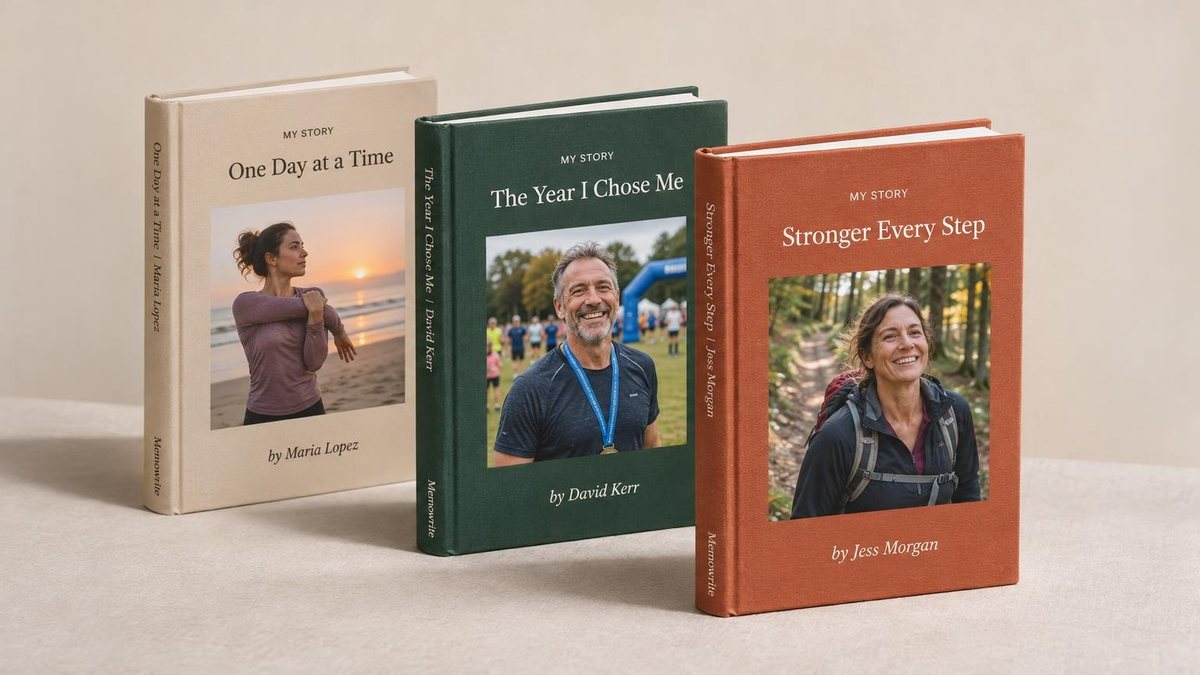
There are many ways to document your weight loss journey: photos, an app, a notebook of figures. This guide is about a different record, the story of what it was like, written in your own words. It works whether you are just starting, somewhere in the middle or looking back years later. If you want that story printed, a weight loss journey book from Memowrite is one way to do it.
Why Document the Story, Not Only the Numbers
Numbers fade into a chart. What you will want later is the rest: why you started, what the hard mornings felt like, who walked with you, the moment you realized something had shifted. Those details disappear faster than people expect. Writing them down while they are close keeps the honest version.
A story is also something you can share. When a friend asks how you did it, you can give them what it was really like instead of a list of tips. And the person it may matter most to, years from now, is you.
This guide is about writing, not about food, exercise or health. For those, talk to your doctor or another professional you trust.
Step 1: Decide What You Want to Keep
Before you choose a notebook or a format, decide what the record is for. A few common answers:
- A private record, so you remember what it was really like.
- A story for your family, who lived through it with you and saw only part of it.
- Something to hand to someone who is about to start their own change.
- A way to make sense of it, by writing until you understand it better.
Your answer decides how honest, how detailed and how private it will be. You can change your mind later. You might start with a private record and decide afterward to share parts of it.
Step 2: Start With the Moment You Decided
The first entry is the easiest: the day you decided. Write what was going on in your life at the time, where you were, who you told and what you hoped would change. Don't worry about writing it well. Write it the way you would tell a close friend.
If you are starting from the middle, or after the fact, the same applies. Go back to that moment first, then fill in what came after. Our weight loss journal prompts have questions for every stage, including the days when you are still in the middle of it.
Step 3: Write Regularly, but Lightly
You don't need to write every day. A few lines a week is enough to keep the thread. What matters is catching moments while they are fresh:
- A day that was hard, and what you did next.
- A small win nobody else noticed: the stairs you took without thinking, the walk you finished, the morning you didn't dread.
- Something someone said, good or bad, and how it landed.
- A change in routine, and how it felt in the first week.
- A question you are turning over, even without an answer.
Date each entry, or note roughly when it happened. Later, those dates let you see the shape of the whole thing.
Step 4: Be Honest About the Hard Parts
Memory smooths things over. In a year, the story may sound like a straight line. It wasn't, and the version with the setbacks is the one worth keeping. Write about the days you wanted to stop, the comments that hurt, the stretches when nothing seemed to change.
Be honest, and be kind. Write about the person who started with the same patience you would show a friend; they are the one who began. If something is still too raw, leave it for now. You can write it later, or leave it out entirely.
Step 5: Keep the Numbers Out
You can document the whole thing without a single number. Weights, sizes and measurements say very little about what the time was like, and they can turn a story into a scorecard. If you want to keep figures for yourself, keep them somewhere else. The story is the main thing.
The same goes for comparisons. A story that measures itself against someone else's will always come up short. Yours only has to be true.
Step 6: Choose Photos That Tell the Story
When people think of documenting weight loss, they often think of side-by-side photos. You don't need any. The photos that tell a story are usually of something else:
- The people who helped: the walking partner, the friend who showed up every week, the family cheering at a charity walk.
- Places that mattered: the trail, the pool, the park bench where you stopped to rest.
- Days you were proud of, whatever happened on them.
- Ordinary moments: a family dinner, a trip, a morning at the window.
If you include photos of yourself, choose ones you like, from any point. A Memowrite book holds up to 100 photos in full color, and you choose every one; none of them need to be about your body.
Step 7: Bring In the People Who Were There
Ask the people who lived it with you what they remember. A partner, a child or a friend will recall things you have forgotten and saw things you didn't. Their words, quoted in your story, can be some of the best lines in it. Ask before you include anything private about them.
Step 8: Shape It Into a Story
Once you have a stack of entries, you can shape them. A simple order works:
- Before: your life when you decided, and why.
- The beginning: the first weeks, and what surprised you.
- The hard part: the setbacks and how you kept going.
- The people: who helped, and how.
- What changed: beyond the scale.
- Now: where you are, and what you would tell someone starting.
It doesn't need a neat ending. Lives keep changing, and you may be writing in the middle of things. A story can be honest about that. Our weight loss scrapbook ideas have more outlines, page ideas and titles.
Sharing Your Story With Family
Some people keep the record private; others share it once they have some distance. If you share it, decide first what stays out. It is your story, and you choose what it includes.
A Memowrite Weight Loss Journey Book gives you guided questions about your story, answered by writing or by speaking, at your own pace, with no schedule. Your answers are printed as a hardcover book of up to 500 pages, and extra copies can be added while the book is still being written, for a parent, a child or the friend who was there every Saturday. You keep full ownership of your stories and photos.
Frequently Asked Questions
What is the best way to document a weight loss journey?
The one you will keep up. If you want to remember what it was like, a written record of the story works better than numbers alone: why you started, the hard days, who helped and what changed. A few lines a week is enough.
Do I need progress photos?
Only if you want them. The story can be told completely without photos of your body. Photos of the people, places and days that mattered often say more.
Can I start documenting after I have already made the change?
Yes. Start with the moment you decided and work forward. Ask the people who were there to help fill in what you have forgotten.
How do I share my weight loss story without it sounding like advice?
Tell what happened to you, in your own words, and leave the tips out. A story about the hard mornings and the people who helped shows others what it was really like, which a plan can't do.
Is it okay to leave things out?
Yes. It is your story, and you decide what it includes. You can leave out numbers, private details and anything you are not ready to write about.
Tell the story of your change
A Weight Loss Journey Book from Memowrite gives you guided questions about why you started, the hard days and what changed. Answer by writing or speaking, add photos if you want, and your answers are printed as a hardcover book. Plans start at $99.