
Baby's First Years guide
How to Fill Out a Baby Book So It Tells Their Story, Step by Step
Updated
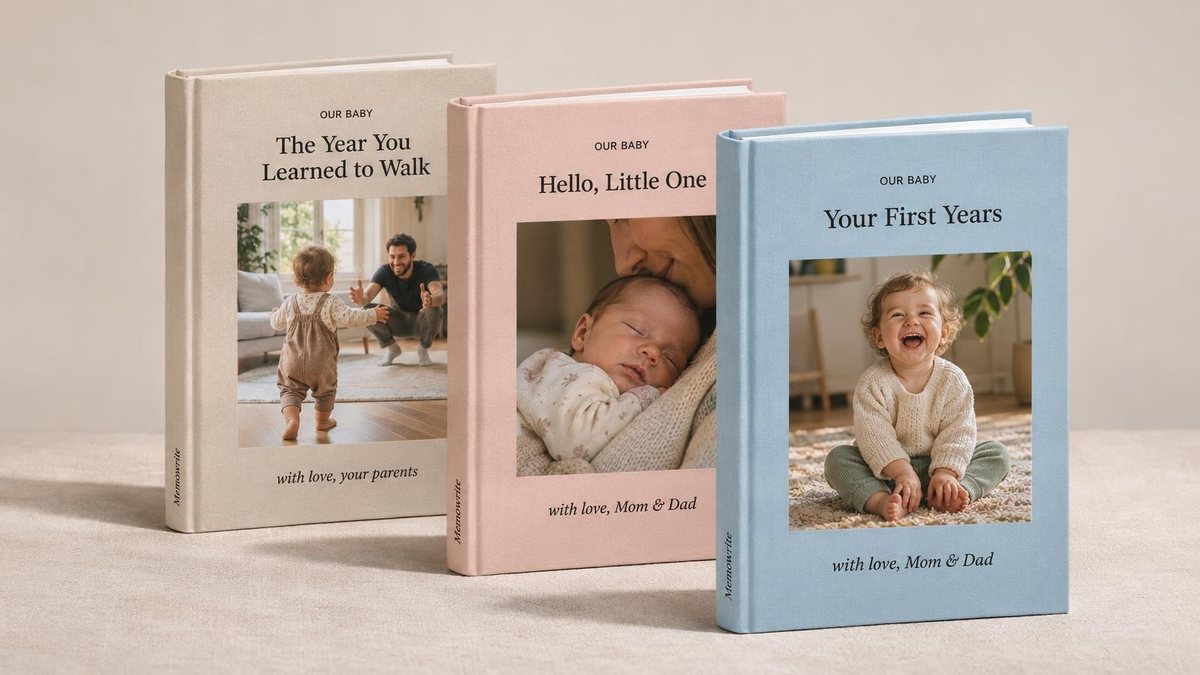
Learning how to fill out a baby book is mostly learning what the blank lines leave out. They ask for a date and a weight, and the photos on your phone show what happened, but neither says what it was like. This guide is a step-by-step method for parents who want the book to hold the stories behind the milestones: where the first steps happened, who cheered, and what went through your head. It works for any notebook or fill-in book, and for a Baby's First Years book printed from your answers.
If you need things to write about rather than a method, our baby book prompts are a list of questions to answer. This page is about the how: where to start, how to write each entry and how to keep going.
How to Fill Out a Baby Book: Stories, Not Just Dates
A date tells your child when something happened. A story tells them what their life was like. “First steps: Saturday morning” is a record. “You let go of the couch, took three steps toward Grandpa, looked back at me as if to check I had seen, and sat down hard on the rug” is a memory they can step into. Both have a place, and the second is the one they will read again.
Most good baby book entries hold four things: what happened, where, who was there, and how you felt. If you get those down, even in a few lines, the entry will mean something in twenty years.
Step 1: Decide What Kind of Book You Are Making
Some parents want a quick record of dates and measurements, and a fill-in book does that well. Others want a book of stories their child can read as an adult. Many want a bit of both. Decide which you are after before you start, because it changes what you write and how much.
Then choose a stretch of time. The first year is a natural frame. Some parents write across the first three or five years instead, which takes the pressure off any single month and lets the book follow the child into talking, opinions and preschool.
Step 2: Gather What You Already Have
You have probably been keeping a baby book without meaning to. Before you write, collect the raw material:
- Photos and videos, with their dates. Scroll back month by month and note any picture with a story behind it.
- Messages you sent to family announcing news, asking for help or sharing something funny.
- Notes on your phone, calendar entries and anything scribbled on the fridge.
- Cards and small keepsakes: the welcome cards, the first outfit, the tag from the first toy.
- Other people's memories. Ask your partner, the grandparents or a sitter what they remember. They saw days you didn't.
Step 3: Start With One Story
Don't begin at page one. Begin with the story you most want to keep, often the day they arrived or how you chose their name. Write it the way you would tell it to a close friend, from the beginning: where you were, what you noticed, what was said. Once one story is down, the next comes more easily.
If a blank page stalls you, use a question instead. Our list of baby book prompts has more than a hundred, from the waiting before they arrived to a letter for later.
Step 4: Write Scenes, Not Summaries
Summaries are easy to write and forgettable to read. “The first months were tiring but wonderful” could be anyone's baby. A scene belongs only to yours. A few ways to get there:
- Pick one moment, not a whole month. The night the power went out during the late feed says more than a paragraph about sleepless weeks.
- Use the senses. What did the room smell like? What was playing? How heavy were they on your shoulder?
- Include other people. Who was in the room, what did they say, and how did they react?
- Name the place. The kitchen floor, the park bench by the pond, the back seat on the drive to Grandma's.
- End with what it meant. One line on why this moment stayed with you is enough.
Step 5: Write Down Their Words Exactly
Once your child starts talking, their words become the best part of the book. Write them exactly, spelled the way they sounded: the made-up names for the dog, the word for spaghetti that only your family understands, the first sentence that made you laugh out loud. Note where they were and what prompted it. These are the details that disappear fastest, because they change every few weeks.
Step 6: Include the Parts You Are Tempted to Leave Out
A baby book doesn't have to be all highlights. The first-time panic, the move to a new apartment with a newborn, the week everyone was sick, the night you sat in the car for five minutes just to breathe: these are part of the story too. Told kindly and with a little distance, they show your child what it really took, and how much they were loved through it.
Write about yourself as well. How old you were, what your work was, what you worried about, what you learned. Your child will want to know who their parents were in these years, not only what they themselves were doing.
Leave out what isn't yours to share. If a story involves someone else's private life, keep it short or change the details.
Step 7: Finish With a Letter to Your Child
Many parents close a baby book with a letter, written straight to the child for the day they read it on their own. It doesn't need to be long. Tell them what they were like at this age, what they have already taught you, and what you hope for them. Write it in plain words, as if they were sitting across from you at twenty.
How to Keep Writing When You Are Tired
- Lower the bar. Two sentences tonight is better than a perfect page you never write.
- Keep a running list of moments on your phone, and turn them into stories on a quieter day.
- Speak instead of typing. Answering out loud works with a baby asleep on your chest.
- Write looking back. You don't have to keep up week by week. Plenty of parents write the whole book when their child is three or four.
- Share the work. A partner or grandparent can take a chapter or add their memories.
Filling Out a Page in Someone Else's Baby Book
If you are a grandparent or a guest asked to fill out a page in someone else's baby book, keep it short and personal. Say who you are to the baby and how you know the family. Share one story about one of their parents as a child, or about the day you heard the news. Add a wish for them and sign it with the date. A grandparent might add what the family was like when the baby's parent was born, which few other people can write.
Turning Your Entries Into a Book
Once you have a handful of stories, look for the shape: by time, from the wait to the first birthday and beyond, or by theme, such as firsts, words, family and places. Our baby memory book ideas show several outlines to borrow.
A Memowrite Baby's First Years book gives you guided questions about your child's early years, answered by writing or by speaking, at your own pace. Every plan includes 50 guided questions and you can add your own. Your answers are printed as a hardcover book of up to 500 pages, with up to 100 photos in full color, and extra copies can be added for the grandparents while it is still being written. You can see how it works step by step.
Frequently Asked Questions
How do you fill out a baby book?
Gather your photos, messages and notes first, then start with the one story you most want to keep rather than page one. For each entry, write what happened, where, who was there and how you felt. Add their words exactly as they said them, and close the book with a letter to your child.
How do you fill out the family tree page in a baby book?
Start with parents and grandparents, then add great-grandparents if you know them. Next to each name, add one small detail: where they grew up, what they did, or a saying the family still repeats. Ask older relatives to check names and spellings.
How do I fill in a baby book if I'm behind?
Don't try to catch up month by month. Go through your photos, pick the moments with a story behind them and write those. A book written looking back is still a book, and often a better-shaped one.
How much should I write for each entry?
As much as the story needs. A funny word can take one line; the day they were born can take several pages. A few honest sentences with names and places beat a long, general paragraph.
What do grandparents write in a baby book?
Who you are, what you felt when you heard the baby was coming, a story about their mom or dad as a child, and a wish for their life. Sign and date it. Short and specific is better than long and general.
Should I write in the baby book as myself or to my child?
Either works. Many parents tell the stories in their own voice and write the closing letter straight to the child. Choose whatever feels natural, and don't worry about being consistent.
Fill it with the story behind every milestone
A Baby's First Years book gives you guided questions about your child's early years. Answer by writing or speaking, add photos, and your stories are printed as a hardcover book. Plans start at $99.