
Baby memory book ideas
Baby Memory Book Ideas: Pages, Outlines and Writing Ideas for the First Years
Updated
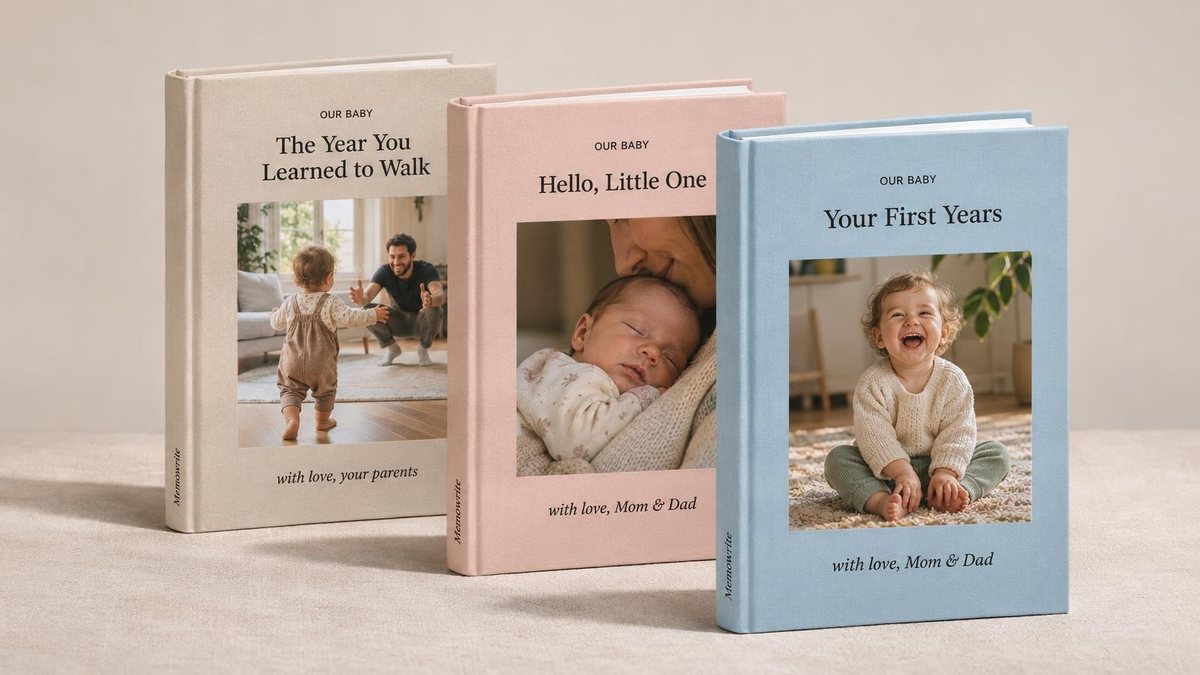
These baby memory book ideas are for parents who want a book about their child's early years that reads like a story, not a form. You will find what to put in it, outlines to borrow, page and photo ideas, writing ideas for when you are stuck, and title ideas. Take what fits your family and leave the rest. The Baby's First Years book page explains how Memowrite prints your answers as a hardcover book.
What to Put in a Baby Memory Book
Think of the book as your child's early years told in stories, from where you stood. Most baby memory books draw on a mix of these:
- The wait: how you found out, how you prepared, and who was excited with you.
- The arrival: the day they were born or the day you first met, told from start to finish.
- Their name: how you chose it, and the names that almost won.
- The first weeks at home, as they really were.
- Firsts with the story around them: the smile, the laugh, the steps, the word, the first birthday.
- Who they are: what makes them laugh, what scares them, their favorite things and their words.
- The people around them: parents, siblings, grandparents, friends and pets.
- Everyday life: your home, your routines, the walk you took every day.
- You as a parent: what you learned, what you worried about, what surprised you.
- A letter to them, for when they are old enough to read it alone.
Baby Memory Book Ideas: Outlines to Borrow
Once you have a few stories written, an outline helps you see the shape of the book. Three ways to arrange it:
By time: from the wait to the first birthday
- Before you: who we were, and how we found out about you
- Getting ready
- The day you arrived
- Your name
- Coming home
- The first weeks: what nobody photographed
- Getting to know you
- Firsts
- Your first holidays and trips
- Your first birthday
- A letter to you
By theme: a book about who they are
- How you came to us
- Things that made you laugh
- Things you loved, and things you refused
- Your words, in your spelling
- Places that were yours
- The people who love you
- Days that went wrong and turned into family stories
- What you taught us
The first five years, one chapter a year
- The year you arrived
- The year you turned one
- The year you turned two
- The year you turned three
- The year you turned four
- Looking back: what we want you to know
Give each chapter a subtitle from what really happened that year in your family: a move, a new sibling, a favorite word, a first friend, a long trip to see the grandparents. Every child's years look different, so let the book follow yours.
Page Ideas That Make a Baby Book Personal
A few pages readers tend to return to, whichever outline you use:
- The world when you were born: what was in the news, what a gallon of milk cost, the songs on the radio, what your town looked like.
- A dictionary of their words: each word as they said it, what it meant and when they used it.
- An ordinary day: one day described hour by hour, from waking to bedtime.
- Favorites: the toy, the book, the song, the food, the person, with a line on each.
- The house they came home to, room by room, and the spot they loved most.
- Notes from the family: a short memory from each grandparent, aunt, uncle or older sibling.
- The things we said we'd never do, and did anyway.
- Then and now: a photo from their first week beside one from their first birthday, with a few lines on what changed.
- A letter to them, to open at eighteen or whenever you choose.
Baby Memory Book Writing Ideas for When You Are Stuck
If the page stays blank, try one of these. Each takes ten minutes and gives you a real entry:
- Describe the last time they laughed so hard they couldn't stop.
- Write down three things they said this week, word for word.
- Tell the story of a first, including what went wrong.
- Describe the view from where you sit when you feed them or read to them.
- Write about who they reach for first, and how they show it.
- Describe something they did today that they will not remember and you don't want to forget.
For a longer list, our baby book prompts cover every stage from the wait to a letter for later, and our guide on how to fill out a baby book shows how to turn a note into a story.
Photo Ideas
Photos carry a lot of a baby book, especially when each one sits next to its story. Some you might look for: the first photo of the two of you, their hands and feet beside yours, the same spot at home every few months, the people who came to meet them, a picture of the house or apartment from outside, and a few of the ordinary mess, such as the high chair after dinner. A short caption saying who, where and what was happening makes each photo far more meaningful. A Memowrite book holds up to 100 photos in full color.
Ideas for a Second or Third Child
Later children often get fewer notes than the first, and they notice. A few ideas that give their book a shape of its own: how their older sibling reacted to the news and to meeting them; what was different, easier or harder the second time; how the two of them play now; and what makes this child unlike anyone else in the family. If you are writing it a few years late, say so in the book and tell the stories anyway.
Ideas for Involving the Family
- Ask each grandparent to tell you what they remember about the day they met the baby, and write it down in their words.
- Ask grandparents what you were like as a baby, so your child can see the family resemblance in stories as well as faces.
- Have an older sibling describe the new baby in their own words. Keep the spelling.
- Ask godparents or close friends for one wish for the child's life.
- If both parents are writing, take turns with the same question and print both answers.
Baby Book Title Ideas
- “[Name]: The First Year”
- “Dear [Name], This Is Where You Started”
- “[Name]'s First Five Years, in Stories”
- “[Name], in Our Words”
- “What We Want You to Know About When You Were Small”
- “The Stories of [Name]'s First Years”
- A word only your child says, as the title
Putting It Together
Start with the stories, not the outline. Write a handful, then see which shape they fit. You don't need to fill every page idea here; a book with twenty good stories and the right photos will mean more than one with every box ticked.
A Memowrite Baby's First Years book gives you guided questions about your child's early years. You answer by writing or by speaking, at your own pace, and can add your own questions. The answers are printed as one hardcover book of up to 500 pages, with up to 100 photos. Extra copies can be added while the book is still being written, and you can create more than one Memowrite book, so each child can have their own.
Frequently Asked Questions
What do you put in a baby memory book?
The wait, the arrival, their name, the first weeks, firsts with the story around them, their words, the people who love them, everyday life and a letter for later. Add photos with short captions. Stories with names and places matter more than filling every section.
How do I make a baby memory book that isn't just a record?
Write scenes instead of dates. For each milestone, add where it happened, who was there and what was said. Include their exact words and a few ordinary days, not only the big moments.
Should a baby memory book cover one year or five?
Either. The first year is a natural frame and quick to finish. Five years gives room for their words, friends and personality. Choose the stretch that fits how much time you have and what you most want to keep.
Can I make a baby memory book after the first year has passed?
Yes. Many parents write looking back, with photos, messages and the grandparents' memories to help. Start with the stories you remember best, then fill in around them.
Turn your ideas into their first book
A Baby's First Years book gives you guided questions about your child's early years. Answer by writing or speaking, add photos, and your stories are printed as a hardcover book. Plans start at $99.