62 questions · Updated
Questions to Ask Someone with Dementia: Simple, Fun and Kind
Simple, fun questions to ask someone with dementia: present-moment, sensory and either-or questions that build connection, not a memory test, with gentle tips.
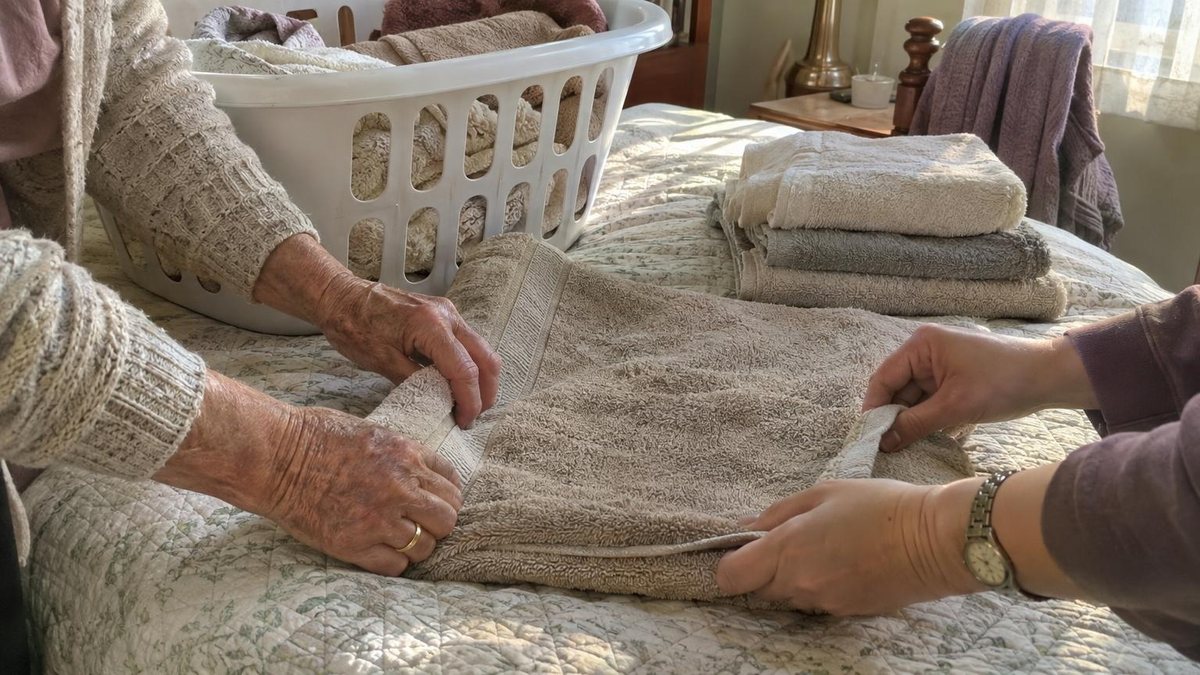
Illustrative image, AI-generated
This page is for anyone who spends time with a person living with dementia: a son or daughter, a grandchild, a spouse, a friend, a volunteer or an activity coordinator. It holds about sixty questions to ask someone with dementia that are simple, fun and kind, along with plain advice on how to ask them.
The questions are built on the communication advice published by dementia charities and the US National Institute on Aging. Most are about the here and now, the senses, favorite things or a simple choice between two options. None of them asks the person to prove what they remember. The goal is a good ten minutes together, not a right answer.
Everyone's dementia is different, and the same person can have good days and harder ones. Treat this list as a menu, not a script. It offers conversation ideas, not medical advice; a doctor, nurse or local dementia charity can help with the person you care for.
Some families also want to keep the stories a parent can still tell. A life story book for an elderly parent starts from guided questions answered by writing or speaking, with a relative beside them if that helps, and the stories are printed as a hardcover book.
Why the Kind of Question Matters
Many everyday questions quietly depend on memory: “What did you have for lunch?”, “Who came to visit yesterday?”, “Do you remember Aunt Ruth?” For someone with dementia, questions like these can feel like a test they are failing. The Alzheimer's Society advises families to avoid trying to jog the person's memory, because it can be frustrating and embarrassing for them.
Good questions for someone with dementia have no wrong answer. “Which do you like better, the yellow roses or the red ones?” works whether they remember last week or not. So does “What do you think of this song?” The answer is about how they feel right now, and that is always theirs to give.
Questions to Avoid, and What to Say Instead
A small change in wording takes the pressure off. A few swaps that follow the charities' advice:
- Instead of “Do you remember our trip to the lake?”, try telling it yourself: “I was thinking about the lake. The water was so cold that summer.” Sharing your own memory lets them join in without being tested, as the Alzheimer's Society suggests.
- Instead of “Who is this in the photo?”, say “This is your sister Ruth at the lake. She looks happy there.”
- Instead of “What would you like to drink?”, offer two options: “Would you like tea or coffee?”
- Instead of “What did you do today?”, ask about something in front of you: “That's a lovely cardigan. Is it warm enough?”
- Instead of correcting a mix-up (“No, Dad, it's 2026, not 1975”), let it go if it is causing no harm or worry, as the Alzheimer's Society advises, and follow the feeling behind it.
Simple Questions About Right Now
Present-moment questions rely on what the person can see, hear, taste or touch. They are the safest place to start any visit.
- What do you see out the window this morning?
- How does the sun feel on your hands?
- Is your tea just right, or would you like a little more milk?
- What do you think of the flowers on the table?
- Which of these two blankets feels softer to you?
- Does this soap smell like lavender to you, or something else?
- What is your favorite thing in this room?
- Is the radio too loud, or is it just right?
Either-Or Questions with Easy Choices
Two options are easier than an open question with endless answers. Keep it to two, and show the choices if you can.
- Would you rather sit by the window or out on the porch?
- Do you like dogs or cats better?
- Which do you prefer, the ocean or the mountains?
- Is a sunrise or a sunset prettier, would you say?
- Should we wear the blue shirt or the green one today?
- Which sounds better for dessert, apple pie or chocolate cake?
- Would you like to look at the garden book or the bird book?
Fun Questions About Favorite Things
Opinions are never wrong. These questions let the person be the expert on their own taste.
- What is the best kind of sandwich?
- What color looks nicest on you?
- What makes a perfect lazy afternoon?
- Which flowers do you like best?
- What is the nicest sound in the world?
- What kind of show makes you laugh?
- What is the best thing to have on a rainy day?
Questions to Ask While Looking at Photos
Photos and familiar objects are good prompts. Ask about what is in the picture rather than asking the person to name who or when. If you know who is in it, say so warmly first.
- What do you notice first in this picture?
- What do you think these people are laughing about?
- Where do you think this was taken?
- What do you make of that hat?
- Does this look like a happy day to you?
- Which of these photos do you like best?
- What would you pack for a day at a beach like that one?
Questions About Music and Songs
Sound is one of the senses the Alzheimer's Association suggests using to communicate. Put a song on first, then ask.
- What do you think of this song?
- Would you like big band music or something quieter?
- Does this tune make you want to dance or sit and listen?
- Would you like to sing the chorus with me?
- Which song should we play next, this one or that one?
- Is this a good song for a Saturday night?
Questions About Food and Cooking
Cooking together, or just smelling something in the oven, gives you plenty to talk about. Many people who cooked for years still enjoy giving an opinion on how it should be done.
- What smells good in here?
- How do you like your eggs?
- Would you help me stir this?
- Is this soup salty enough for you?
- Should we add cinnamon or nutmeg?
- What is the secret to good gravy?
- What goes best with a slice of apple pie?
Questions That Ask for Their Know-How
Asking for advice treats the person as someone with skills to share, not only as someone who is being looked after. Pick topics that match their life: gardening, fixing things, sewing, farming, cooking, teaching.
- What is the trick to folding a fitted sheet?
- How do you know when bread is done?
- What should I know before I plant roses?
- What makes someone a good neighbor?
- Which tools should every house have?
- What is the best way to fix a squeaky door?
- How should I keep these tomatoes from splitting?
Gentle Questions About Long Ago
Some people with dementia love to talk about their younger years; others find it confusing. These questions invite a story without asking for names, dates or facts you could check. If the person seems unsure or anxious, go back to the present.
- What did you like to do on summer evenings when you were young?
- What was the best part of being a teenager?
- What kind of dances did people go to when you were young?
- What were you like as a little girl, or a little boy?
- What did you love about being a mom, or a dad?
- What kind of car would you have liked to drive?
Silly Questions for a Good Day
On a bright, lively day, a little nonsense can bring a big laugh. Imagination questions are harder for some people, so save these for when the conversation is already flowing.
- If you could have any animal as a pet, what would it be?
- What would you name a goldfish?
- What do you think the dog is thinking right now?
- If you ran a bakery, what would you sell first?
- Which of these two jokes is worse?
- Which of these hats is the silliest?
- If you could fill this room with one smell, what would it be?
Pair Questions with Something to Do
Sitting face to face and trading questions can feel like an interview. Doing something side by side often works better, and the questions come up on their own. Fold a basket of warm towels together and ask which ones are softest. Leaf through a seed catalog and ask which tomatoes look best. Sort a jar of buttons by color, water the houseplants, shell peas, or take a slow walk around the garden and stop at whatever catches their eye.
A task gives the hands something familiar to do and takes the spotlight off the answer. If the person goes quiet, the activity carries the visit, and you can try another question in a few minutes. Choose tasks that suit their old routines: a former carpenter may enjoy sanding a small board, a lifelong cook may like to supervise you making biscuits.
How to Ask Questions So They Feel Like Conversation
- Choose a quiet moment. The Alzheimer's Association suggests one-on-one conversation in a quiet space with few distractions. Turn off the television first.
- Start with their name and a smile. The National Institute on Aging's do's and don'ts for communicating begin with making eye contact and using the person's name.
- Ask one question at a time. Then wait. The Alzheimer's Association advises giving the person plenty of time to respond and not interrupting.
- Leave pauses. The Alzheimer's Society notes that pressure to reply can put someone off talking; let them finish their own sentences, even when you think you know the end.
- Offer two choices, not ten. The Society's own example is asking whether they would like tea or coffee rather than what they would like to drink.
- Use your hands and senses. A photo, a flower, a song or a familiar object gives the question something to hold on to.
- Keep it short. If the person tires easily, the Alzheimer's Society suggests short, regular conversations over long ones. Ten good minutes beat an hour of strain.
- Never talk about them as if they aren't there. Include them in the conversation even when other people are in the room.
Adjusting as Things Change
In the earlier stages, many people still enjoy open questions, long stories and the silly questions above. As dementia progresses, simpler questions usually work better: either-or choices, questions with a yes or no answer, and questions about what is right in front of you. The Alzheimer's Association notes that in the later stage it helps to approach from the front, say who you are, and use touch, sights, sounds, smells and tastes alongside words.
If words become difficult, a question can be as simple as holding up two sweaters, or humming a tune and watching for a smile. Connection does not depend on a full answer.
When a Question Upsets Them
Sometimes a harmless question touches something painful, or the person becomes confused about where they are or who is still alive. Do not argue or correct; the Alzheimer's Association advises against both. Respond to the feeling (“That sounds like it worries you”), offer comfort, and change the subject to something calm in the room. A cup of tea, a walk to the window or a favorite song can reset the moment. Then try again another day.
How to Keep the Stories
Stories often come up when you are not expecting them: over a meal, during a song, while folding laundry. Jot them down after the visit, in the person's own words where you can, and share them with the rest of the family. If other relatives want to write down their own memories, or a parent in the early stages wants to tell their story with help, Memowrite turns written or spoken answers to guided questions into a hardcover book. You can read how Memowrite works. For questions suited to older relatives without memory loss, see the questions to ask elderly parents.
Frequently Asked Questions
What should you not ask someone with dementia?
Avoid questions that test memory, such as “Do you remember…?”, “What day is it?” or “Who am I?” Avoid long questions with several parts, and open questions with too many possible answers. Ask one simple thing at a time, ideally about the present or a choice between two options.
Is it okay to ask about the past?
Yes, if it feels like an invitation rather than a test. “What did you like to do on summer evenings when you were young?” has no wrong answer; “What year did you get married?” does. Watch how the person responds, and return to the present if they seem unsure or upset.
What are fun questions to ask dementia patients in a care home?
Questions about favorite foods, songs, colors and animals work well in a group because everyone can answer and no one can be wrong. Either-or questions (“dogs or cats?”, “beach or mountains?”) are quick and often get people talking to each other. Pair the questions with music, photos or something to touch.
What if they ask the same question over and over?
Answer kindly each time, as if it were the first, in a calm voice. A short written note can help too; the Alzheimer's Association mentions that written notes can help when spoken words are confusing. If the question seems to come from worry, respond to the worry as well as the words.
How long should a conversation last?
As long as it stays enjoyable for them. For many people that is ten or fifteen minutes; on a good day it may be longer. Stop while it is still pleasant, and come back another time.
Keep the answers in a book
Memowrite asks the questions, your family can answer by writing or speaking, and the stories are printed as a hardcover book the family keeps.