
Tribute book questions
Memory Book Questions for Someone Who Has Passed Away
112 questions · Updated
These memory book questions are for writing about someone who has passed away: a parent, a grandparent, a partner, a friend. Each one asks about them, or about the time you had together, so your answers can become pages in a memory book. They are the kind of questions a tribute book is built from, and you can use them in a notebook, on a laptop, or around a table with family.
Take them slowly. You don't need to answer all of them, or answer them in order. Some will bring back a story straight away. Others may be too much for now, and it is fine to skip those and come back another day, or not at all.
The lists start with who they were and move through their everyday life, the things they loved, the times you shared and what they left with you. The last list is for other people who knew them, so the book can hold more than one view of the same person.
When to Use These Questions
There is no right time. Some people start in the first weeks, when family is together and stories are being told anyway. Others wait a year or more, until remembering feels more like comfort than pain. Both are normal.
If you are writing something for a memorial service, a few questions answered well is enough: one story, one saying, one thing they taught you. Our guide on how to write a tribute covers that shorter piece, and tribute book ideas shows how to gather the answers into a book over the months that follow. If the person you have in mind is living, a love story book is the one written for them to read.
Memory Book Questions About Who They Were
Start broad. These help you describe the person to someone who never met them, such as a grandchild born years from now.
- How would you describe them to someone who never got to meet them?
- What three words would the people closest to them use to describe them?
- What do they look like in the picture of them you carry in your mind?
- What was their voice like, and how did they answer the phone?
- What were they known for in the family, or in the neighborhood?
- What were they quietly proud of, even if they rarely said so?
- What did they care about more than most people realized?
- What made them different from everyone else you know?
- What did they do better than anyone else you know?
- How did they change over the years you knew them?
- What do you think they would want people to remember about them?
- What did people notice first when they walked into a room?
Questions About How You Knew Them
These are about your place in their life, and theirs in yours.
- What is your earliest memory of them?
- How did you first meet, or when did you first understand who they were to you?
- What did you call them, and is there a story behind the name?
- What did they call you, and when did they use that name?
- How did your relationship change as you both got older?
- When did you feel closest to them?
- What did the two of you have in common?
- What did you disagree about, and how did you settle it, or not?
- Where did you usually see them: whose kitchen, which porch, what car?
- What was a typical visit or day together like?
- What do you think you meant to them?
Their Everyday Life, Habits and Sayings
Small details often bring a person back more clearly than big events. These are the pages family members tend to read twice.
- What did a normal morning look like for them?
- What did they always carry in their pockets, purse or glove box?
- What phrases did they repeat so often the family can still say them word for word?
- What was their favorite meal, and who made it?
- What did they always order at their favorite place to eat?
- What songs did they sing, hum or play over and over?
- What did their handwriting look like, and what kind of notes did they leave?
- What smell or sound reminds you of them?
- What routines did they keep, no matter what?
- What did they wear that everyone would recognize?
- What little habit of theirs used to drive you a bit crazy, and now makes you smile?
- What did they do with their hands when they were thinking or talking?
Their Work, Skills and the Things They Made
Their working life, paid or unpaid, and what they could do well.
- What work did they do, and how did they feel about it?
- What were they good at that most people never saw?
- What did they make, fix, grow, cook or build?
- What did they teach themselves?
- Who did they help through their work, and how?
- What object they made or owned does the family still keep?
- What problems did people bring to them, because they knew they could sort them out?
- What did they want to learn or try that they never got around to?
- What hobby could keep them busy for hours?
- What would their coworkers, students or customers say about them?
- How did they spend the first free afternoon after a long week?
Family, Home and Traditions
The home they made and the family around them.
- What was their home like, and what did it smell like when you walked in?
- What traditions did they start, or keep going for everyone else?
- How did they celebrate birthdays and holidays?
- What recipes did they leave behind, and who makes them now?
- What role did they play when the whole family got together?
- How did they show love to their children or grandchildren?
- What did they always say when the family sat down together?
- What family stories did they tell, and how did they tell them?
- What did they keep in their house that you will always link to them?
- Which family member is most like them, and in what way?
- What place did they call home, even after they moved away?
Times You Shared
The memories you return to. Write as much detail as you can: where you were, what was said, what the weather was like, what happened next.
- What moment with them do you find yourself thinking about most?
- Which ordinary afternoon with them would you like to have back, and why that one?
- What trip or outing with them do you remember best?
- When did they surprise you?
- What good news did you share with them, and how did they react?
- What is the funniest thing that ever happened when you were with them?
- What did you do together that no one else did with them?
- When did they show up for you when you needed it?
- What was the last really good conversation you had with them?
- What gift did they give you that you still think about?
- Which holiday or celebration with them stands out?
- What would you tell them about a moment you shared, if you could?
Their Humor, Opinions and How They Saw the World
Their personality, in their own terms.
- What made them laugh?
- What jokes or stories did they tell again and again?
- What did they have strong opinions about?
- What did they think was overrated, and what did they think everyone underrated?
- How did they handle bad news or a bad day?
- What did they believe in?
- What were they afraid of, and what were they brave about?
- What made them angry, and what calmed them down?
- How did they treat strangers, neighbors and the people who served them?
- What did they think a good life was?
- What did they find beautiful?
What They Taught You
The lessons, spoken or not.
- What is the most useful thing they ever taught you?
- What advice did they give that you ignored at first and follow now?
- What did you learn from watching how they lived?
- What skill did they pass on to you?
- What did they teach you about being a parent, a partner or a friend?
- What did they teach you without meaning to?
- Whose voice do you hear when you have a hard decision to make, and what does it say?
- What did they get right that you would like to pass on?
- In what ways are you like them?
- How did they make you braver?
- What did they teach you about getting through hard times?
Carrying Them With You
These look forward. Some people find them the hardest to answer, and some find them the most comforting.
- What do you do now that they would recognize as theirs?
- What object of theirs do you keep close, and why that one?
- What would you like the youngest people in the family to know about them?
- Which of their traditions would you like to keep going?
- Where do you feel close to them?
- What would you want to tell them about how things are now?
- What do you wish you had asked them?
- What would you thank them for?
- How would you like them to be remembered at family gatherings in years to come?
- What would they say if they could see the family today?
Questions to Ask Family and Friends Who Knew Them
A memory book is fuller with more voices. Send two or three of these to a sibling, an old friend, a coworker or a neighbor, or ask them out loud and write down what they say.
- What is your first memory of them?
- How did the two of you meet?
- What story about them do you tell most often?
- What did they do for you that you never forgot?
- What did they teach you?
- What were they like when they were young, before I knew them?
- What is something about them that I might not know?
- What did they always say?
- What made them laugh hardest when you were together?
- What would you want their grandchildren to know about them?
- Do you have a photo of them that you would be willing to share, and what is the story behind it?
How to Answer These Questions
- Start with the easiest question, not the most important one. A favorite meal or a saying is a gentle way in.
- Write the way you would tell it. Short sentences and plain words are fine; this is not an essay.
- Use their own words where you can. If they always said something a certain way, write it that way.
- Let a photo start you off. Pick one picture, then write down where it was taken and what happened just before and after.
- If a question hurts too much, skip it. You can come back to it later, or leave it out of the book.
- If you would rather talk than write, record yourself telling the story and write it down afterward.
- When you ask others, ask for one or two answers, not twenty. People tend to send more when the request is small.
- It is fine to include the hard parts, told kindly. A real person had bad days too, and the book can say so.
How to Keep the Answers
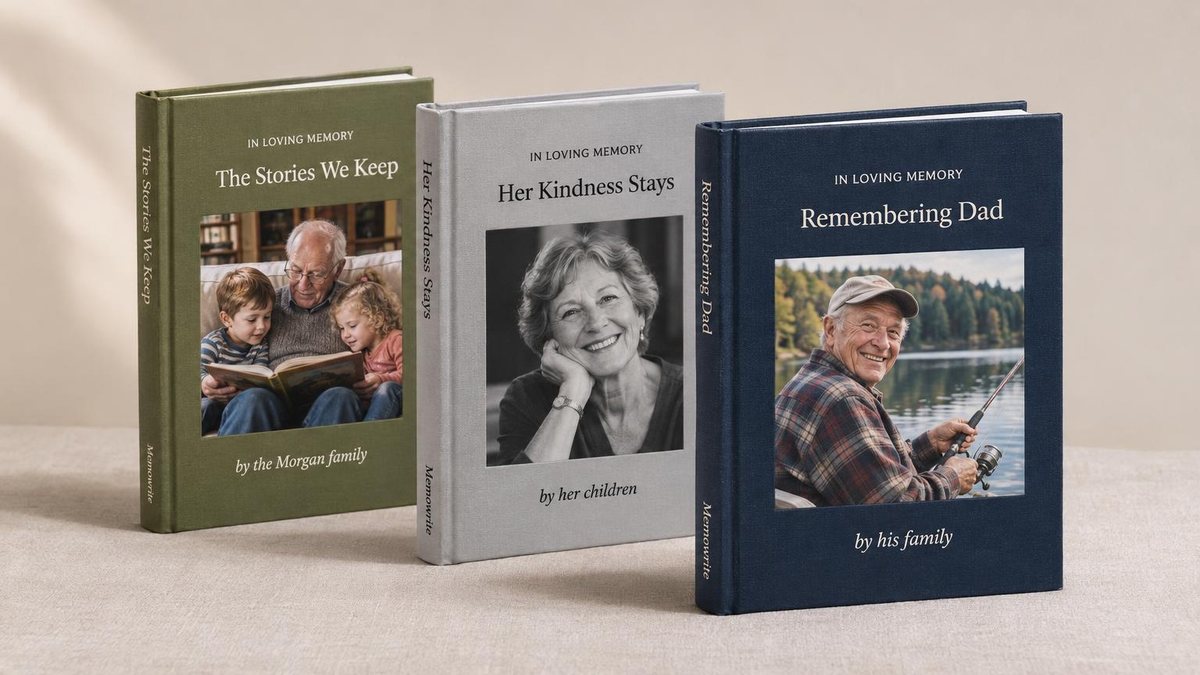
However you collect them, keep the answers together in one place so they don't scatter across notebooks and message threads. If you would like them printed, a Memowrite tribute book gives you guided questions like these, lets you answer by writing or by speaking, and prints the stories as a hardcover book with photos. You can read how Memowrite works step by step. There is no schedule, and the book is printed once the stories are ready.
Frequently Asked Questions
What should I write in a memory book for someone who passed away?
Write what made them themselves: the way they talked, what they cared about, the stories the family tells about them, and what they gave you. Specific moments matter more than a full list of dates. A few true stories, their sayings and some photos can say more than a complete biography.
How many questions should I answer?
As many as you want to. Some memory books hold a handful of long stories; others gather short answers from a dozen people. Choose the questions that bring a memory back and leave the rest.
Can several people write in the same memory book?
Yes, and it often makes the book richer. One person can collect answers from family and friends and keep each in the writer's own words, with their name beside it. The last list above has questions to send to others.
Is it too soon to start a memory book?
Only you can tell. If remembering brings some comfort, it may be a good time; if every question reopens the loss, it is fine to wait. Many people come back to it months or years later, and the stories are still there.
What if my relationship with them was complicated?
You can write about the parts that were good and leave out what you are not ready to put on paper. You can also write about the difficult parts, honestly and kindly. A memory book does not need to describe a perfect person to be true.
If you would like these memories kept in a book
A Tribute book offers guided questions about the person you are remembering. You can answer by writing or speaking, at your own pace, add photos, and the stories are printed as a hardcover book once they are ready.