
Pet Book guide
How to Write a Book About Your Dog, Cat or Any Pet
Updated
If you have ever wanted to write a book about your dog, you already have most of what you need: years of stories, a phone full of photos and a clear picture of who they are. This guide shows how to turn that into a book, step by step. It works the same for a cat, a horse or a rabbit, and for a pet who is with you now or one you have lost. A pet memory book from Memowrite is one way to have it printed.
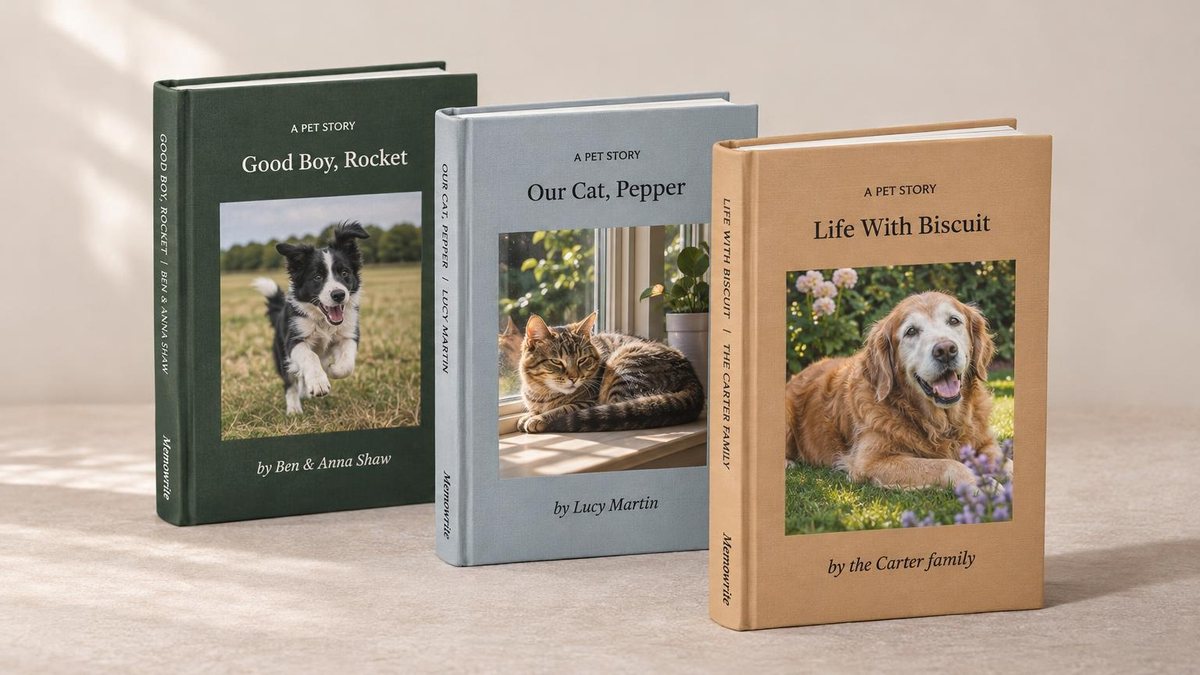
Decide What Kind of Book It Is
Before you start, decide who the book is for. That choice shapes everything else.
- A family keepsake is written for the people who live with the animal now, and for the kids to read when they are grown. It can be funny, specific and full of in-jokes.
- A memorial book is written after a pet has died, to set down the whole life in one place. It can be quieter, and it can take as long as you need.
- A first-year book follows a puppy or kitten through the months when something changes every week.
- A story for children about your dog is a different project, written in short, simple sentences around one adventure. The steps below still help you gather the material.
Most people writing about their own animal are making one of the first three. Those are the books this guide is about.
Step 1: Gather the Stories Before You Write
Don't start at page one. Start with a list. Over a week or two, write down every story, habit and phrase that comes to mind, in any order, a line each. Look through your photos; each one tends to bring back the story around it. Ask everyone who knew the animal for one memory: your partner, the kids, the neighbor who fed them when you were away.
If you get stuck, our questions about your pet cover the arrival, the daily routine, the habits, the people and the adventures, with a section for kids and one for a pet who has died. The things worth gathering:
- The arrival: where they came from, how you chose them, the first night.
- The name: how it was settled, and the nicknames that came after.
- The routine: an ordinary day, from the first sound in the morning to the last trip outside at night.
- The quirks: the rule they broke daily, the harmless thing they were afraid of, the spot on the couch that became theirs.
- The people: who they chose, who they ignored, who they greeted first.
- The big stories: the escape, the day at the lake, the vet visit the family still talks about.
Step 2: Choose a Simple Structure
A pet book doesn't need a clever shape. Two work well:
- In order, from the first day. Arrival, the early months, the settled years, the adventures, growing older and what they gave you. This suits a memorial book, because it tells the whole life.
- By theme. One chapter each for their habits, their people, their places, their food, their worst mischief and their best day. This suits a living pet, because you can keep adding to any chapter.
Our pet memory book ideas have sample outlines for a dog, a cat, a first year and a pet who has died, plus page and title ideas.
Step 3: Write Scenes, Not Descriptions
The difference between a list of facts and a story is a scene. “She was very loyal” tells the reader what to think. “Every day at ten past five she sat by the front window, and if the bus was late she sighed” lets them see her. Pick one moment, say where you were, what happened and what was said, and stop when the moment ends.
Use the details only you know: the name you call them in the kitchen, the sound of the tags against the bowl, the way they turn around three times before lying down. Those are the lines readers remember.
Write in your own voice, and let it be funny. Pet stories are funny, because animals are. You can write as yourself, or speak to the animal directly (“You arrived in a cardboard box, furious”). Some people write one chapter as if the animal were telling it. Pick whatever feels natural and keep it the same within a chapter.
Step 4: Bring In the Rest of the Family
Each person in the house knows a slightly different animal. The kids know the one who sleeps on their bed. You know the one who waits at the door at five. Ask each of them the same few questions and give their answers a page of their own, in their words. Younger children can tell their stories out loud while you write them down.
Step 5: Choose the Photos
With a pet, the hard part is choosing. Pick photos that belong to a story you have written, so every picture has words beside it. Keep a few blurry ones that show what they were really like. Include their places and their people: the lap, the yard, the car window. A short caption under each photo, saying when and where, makes it far more meaningful years later. A Memowrite book holds up to 100 photos in full color.
How to Write About a Dog or Cat Who Has Died
Writing about an animal who has died is different from writing about one asleep on the rug next to you. Losing a pet is a real loss, and not everyone around you will understand how much they mattered. Be gentle with yourself about the timing. Some people want to write in the first days, while the house still feels too quiet; others need months. Both are normal.
It often helps to start with a happy story, such as the day they came home, rather than the last weeks. The aim is to remember the whole life. When you are ready, a letter written to them can be a gentle last chapter: what you would say if they could read it, what you miss, what you are grateful for.
If you are writing with a child who is grieving, let them choose the photos and tell one story out loud. It gives them a way to talk about it. If you are also remembering a person who has died, the tribute book is made for that.
Step 6: Read It Back and Finish
Read the whole thing once, out loud if you can. Cut what repeats, and check names and dates you are unsure of; someone in the family can usually help. Then decide it is finished. A pet book doesn't need to be long. A couple of dozen good stories with photos make a book the family will pick up again and again.
Turning It Into a Printed Book
A Memowrite Pet Book gives you guided questions about your animal. You answer by writing or by speaking, at your own pace, with no schedule, and you can add your own questions, for example a chapter for each pet if you have more than one. Your stories and up to 100 photos are printed as a hardcover book of up to 500 pages once they are ready. Extra copies can be added while the book is still being written, which helps if each of the kids will want one.
Frequently Asked Questions
How do I start writing a book about my dog?
Start with a list of stories rather than a first sentence. Write down the day they came home, an ordinary day together and the three stories you tell most often. Then pick the easiest one and write it as a scene.
How long should a book about my pet be?
As long as the stories you want to keep. A few dozen pages with photos is plenty for many families; others write much more. There is no right length.
Can I write a book about my cat the same way?
Yes. Everything here works for a cat, a horse, a rabbit or a bird. Skip what doesn't fit, such as walks, and write about what does: where they sleep, who they chose, what they refuse to do.
How do I write a tribute to a dog who died?
Start with who they were to you, in one plain sentence, then tell one or two stories that show their character. Close with what you miss or what they gave you. A letter addressed to them is another gentle way to do it.
Should I write it as if my pet were telling the story?
You can. Some people enjoy writing a chapter in the animal's voice, and children often love it. Most pet books are written by the owner in their own voice, because that is the story only they can tell.
A book about your dog, cat or any pet
A Pet Book from Memowrite gives you guided questions about your animal, living or lost. Answer by writing or speaking, at your own pace, add photos, and your stories are printed as a hardcover book.