
Love Story book guide
How to Write Your Love Story: A Guide to Writing About Your Relationship
Updated
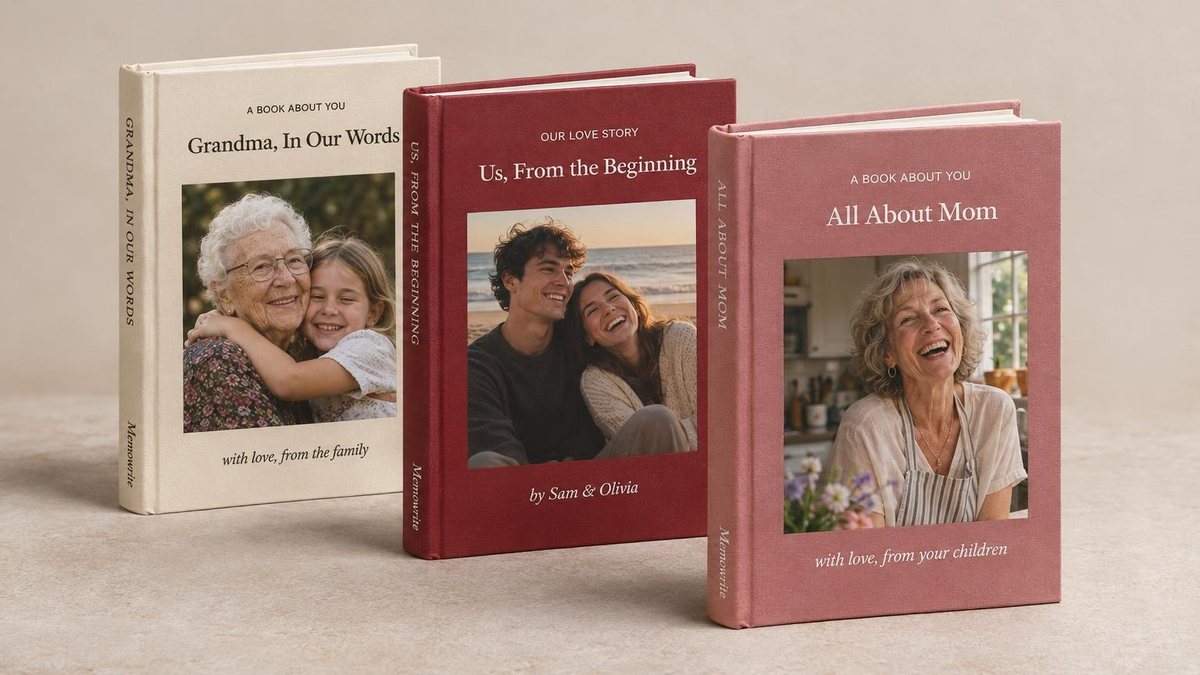
This guide is about how to write your love story: the true story of your relationship, written by you, for the person it is about. It works for a partner, and with small changes for a parent, a grandparent or a lifelong friend. When you are done you might have a few pages for a card, or enough for a book about someone you love, printed in hardcover.
Step 1: Decide Who It Is For and What It Is For
A love story written for your partner's eyes reads differently from one the whole family will pass around. Before you start, answer two questions: who will read it, and what do you want them to feel when they close it? Proud, understood, laughing, thanked? That answer will help you decide what goes in and what stays out.
Then think about the occasion, if there is one: an anniversary, a wedding, a milestone birthday, Valentine's Day. An occasion gives you a reason to finish, but you don't need one. Some of the best love stories are given on an ordinary weeknight.
Step 2: Gather Your Memories
Don't start by writing. Start by collecting. Scroll back through old photos and messages, find the ticket stubs and cards, and write a rough list of moments as they come to you. Our writing prompts about someone you love can help when the list stalls.
- Firsts: the first meeting, first date, first trip, first home, first big argument.
- Ordinary days: a routine, a Sunday, a meal you always make together.
- Turning points: the moment you knew, a move, a wedding, a child, a loss you shared.
- Their words: things they said that you have never forgotten.
- Running jokes: the in-jokes and nicknames, and where they came from.
Step 3: Begin With How You Met
Most love stories begin at the beginning, and for good reason: your partner has probably never heard the whole of it from your side. Write what you saw, what you thought and what you nearly did instead. Include the awkward parts. A first impression that turned out to be wrong is often the best story in the book.
If you are writing about a parent or grandparent, begin with your earliest memory of them instead. A kitchen, a smell, the sound of their car in the driveway.
Step 4: Write Scenes, Not Summaries
“We had a wonderful trip to the coast” tells them nothing they don't already know. A scene does: the rental car with the broken heater, the café that was closed, the sandwich you ate on the sea wall in the rain while they laughed at you. Pick a moment, put yourself back there, and write what happened in order, with what was said.
- Use real details: places, weather, food, the song on the radio.
- Include what they said, in their own words, as closely as you remember it.
- Say what you felt at the time, and what you think about it now.
- Keep each scene short. Several small scenes read better than one long account.
Step 5: Tell the Hard Parts, Kindly
A love story with no difficulty in it can read like a greeting card. Most relationships have a hard stretch: an illness, a long distance, money worries, a time you nearly gave up. Including one, told kindly and from where you stand now, shows what the two of you are made of. Leave out anything that would embarrass them in front of others, or that you have not talked about together.
Step 6: Give It a Shape
Once you have a pile of stories, put them in an order. The simplest is time: how you met, the early days, the life you built, where you are now. Another is by theme: the things you love about them, your traditions, your adventures, what you have learned. For more outlines and chapter titles, see our love story book ideas.
End with something that looks ahead: a tradition you would like to start, a place you want to go together, or what you hope never changes. It leaves them with something to keep, not just something to remember.
Step 7: Read It Through Their Eyes
Read the whole thing as if you were them. Does it sound like you? Is there anything they would wince at? Is anyone important left out? Fix the names and dates you are unsure of, quietly, without spoiling the surprise. Then stop editing. It doesn't need to be perfect, only true.
Writing a Love Story About a Parent or Friend
The same steps work for anyone you love. For a parent, the scenes come from childhood and from the years since you grew up: what they did when you were struggling, the phrase of theirs you still repeat. For a friend, it is the story of how you found each other and what you have seen each other through.
This is different from a book they write about their own life. If you would like your parents to tell the story of how they met, in their words, our questions to ask your parents are a good place to start, and a memoir is the book for it.
Turning It Into a Book
A Memowrite Love Story book gives you guided questions about the person you love, so you never face a blank page. You answer by writing or by speaking, at your own pace, add up to 100 photos, and your answers are printed as one hardcover book of up to 500 pages. Every plan includes 50 guided questions and you can add your own.
If you have an anniversary or a birthday in mind, start well ahead. The book is printed and shipped once your stories are ready, not on a set date, so many people give the first story copied into a card on the day and hand over the hardcover when it arrives. If the person you want to write about has died, our tribute book is written for that.
Frequently Asked Questions
How do I start writing our love story?
Start with how you met, told from your side, including what you thought of them at first. If that feels too big, start with one small memory you love and write it as a scene. The beginning can be written last.
How long should a love story be?
As long as the stories you want to tell. A single page in a card can be enough. A book might hold a few dozen short pieces with photos. Several short stories usually read better than one long account.
Do I need to be a good writer?
No. Write the way you would tell it to a friend. Plain sentences and real details matter far more than polish, and the person reading it wants to hear your voice, not a writer's.
Should I include the difficult times?
One or two, told kindly, often make a love story feel true. Choose times you have come through together and talked about, and leave out anything private that they would not want others to read.
Can I keep it a surprise?
Yes. Collect photos quietly, ask a mutual friend for a story or two, and check dates without saying why. If you are writing about a couple, such as your parents, their friends and siblings can fill in the parts you weren't there for.
Turn your love story into a book
A Love Story book gives you guided questions about the person you love. Answer them by writing or speaking, add photos, and your stories are printed as a hardcover book. Plans start at $99.